Moving to the Canary Islands 2026: Cost of Living, Visas and the Islands Compared
- ❤️ Living in the Canary Islands, island by island
- 🔍 What people moving to the Canary Islands ask us
- 💻 Canary Islands cost of living: what a new tenant pays
- 🔍 Canary Islands residency requirements: the same visas as mainland Spain
- 🎧 Moving to Gran Canaria from the UK, or to any other island
- ⚖️ Healthcare in the Canary Islands
- ⚖️ Canary Islands taxes: IGIC, ZEC, wealth tax and inheritance
- 🔥 Frequently asked questions
Moving to the Canary Islands is moving to Spain: the visas, the income thresholds and the paperwork are the same as on the mainland. If you are not an EU citizen, that usually means the non-lucrative visa (€2,400 a month in income or savings) or the digital nomad visa (€2,850 a month gross).
What the islands change is the money. A 70 m² flat is advertised at about €1,000 a month in Santa Cruz de Tenerife and Las Palmas, between 37% and 40% less than in Madrid. Sales tax is IGIC at 7% instead of 21% VAT. And when someone who lived on the islands dies, their close family pay 0.1% of the usual inheritance tax.
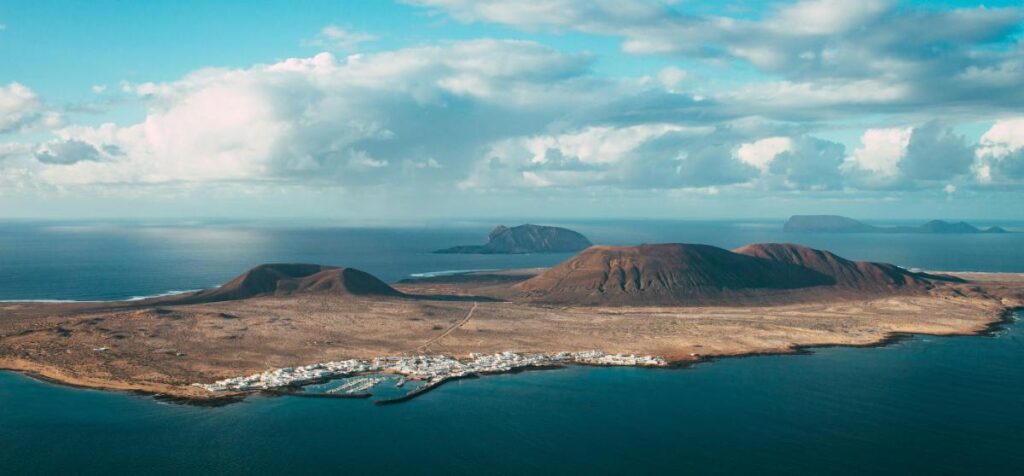
Living in the Canary Islands, island by island
About 2.28 million people live on the islands, 1.85 million of them on Tenerife and Gran Canaria (INE, 1 July 2026, provisional). Tenerife, Gran Canaria, Lanzarote, Fuerteventura and La Palma are five different moves, and these are the official figures that separate them.
| Island | Median rent on current leases, flat | January average | Main public hospital (beds) | UK airports with direct flights | Registered Britons / Americans |
|---|---|---|---|---|---|
| Tenerife | €599 Santa Cruz €633 Adeje | 18.6°C south 13.3°C north | Candelaria (839) and Hospital Universitario de Canarias (681), both in the north-east; Hospital del Sur, Arona (98) | 21 to Tenerife South none to Tenerife North | 12,714 / 639 |
| Gran Canaria | €600 Las Palmas €600 Mogán | 18.2°C | Dr. Negrín (652) and Insular Materno Infantil (916), Las Palmas | 17 | 3,005 / 424 |
| Lanzarote | €500 Arrecife €595 Tías | 17.6°C | Dr. José Molina Orosa, Arrecife (252) | 17 | 5,944 / 93 |
| Fuerteventura | €481 Puerto del Rosario €542 La Oliva | 17.8°C | Hospital General de Fuerteventura, Puerto del Rosario (131) | 15 | 3,673 / 87 |
| La Palma | €480 Los Llanos de Aridane €500 Santa Cruz de La Palma | 18.3°C | Hospital Universitario General de La Palma, Breña Alta (198) | 2 (Gatwick, Manchester) | 213 / 48 |
Tenerife South has more direct UK routes than any other airport on the islands, and the south of Tenerife is where the Britons are: Arona, Adeje and San Miguel de Abona alone have 8,840 of them on the register. The two large teaching hospitals, though, are in the north-east, around Santa Cruz and La Laguna. The public hospital in the south, Hospital del Sur in Arona, has 98 beds.
Lanzarote is the surprise. It has 5,944 registered Britons, nearly twice as many as Gran Canaria, with a fifth of the population. Gran Canaria is the most urban island: Las Palmas had 384,023 residents in the 2025 census, and most of the island’s registered Americans live there.
La Palma is the quiet option. Two UK routes, very few Britons, rents at the bottom of the table and a grey January: 4.7 hours of sun a day at the airport, the same as Tenerife North, against 6.7 at Tenerife South (AEMET). Summers are mild: August averages between 24.1°C and 25.8°C at the coastal airport stations and in Santa Cruz, and 21.5°C at Tenerife North, 632 metres up.
For families, NABSS, the association of British schools in Spain, lists member schools on Tenerife, Gran Canaria and Lanzarote (NABSS, Sep 2026).
The British figures count people on the town hall register, the padrón. Plenty of Britons winter on the islands without registering. The 32,000 registered and 45,000 in total that still come up in searches are a UK government estimate from February 2015; the latest official count is the 25,740 above. For every Spanish town, see our count of how many Brits live in Spain. Weighing the Canaries against the Balearics instead? Read our guide to moving to Mallorca.
What people moving to the Canary Islands ask us
In My Spain Visa enquiry records, 2021 to 2026, the people who mention the islands are British first, then American, then Canadian. Tenerife is the island they name most, well ahead of the others. Lanzarote and Gran Canaria come next, close together, followed by Fuerteventura. La Palma hardly comes up.
The questions are consistent. The most common is how to move as a couple or a family. Then comes the non-lucrative visa, the usual route for retiring in Spain, and the NIE, TIE and padrón paperwork that follows it. Holiday-home owners asking how long they can stay are not far behind. The digital nomad visa sits near the bottom of the list.
Island by island, the order shifts. In enquiries that name Lanzarote, the holiday-home question climbs to fourth place, higher than for Tenerife or Gran Canaria. For Gran Canaria, the NIE, TIE and padrón paperwork comes before the non-lucrative visa itself, and running a business or working self-employed makes the top five. Fuerteventura and La Palma come up too rarely to rank.
Canary Islands cost of living: what a new tenant pays
Rent is where most cost-of-living guides go wrong. Official rent figures of €500 to €600 a month are medians of leases already in force, including leases signed years ago. A new tenant is asked much more: in Santa Cruz de Tenerife and Las Palmas, about 65% to 70% above the median lease.
| Town | Asking rent, 70 m² flat, long let | Median rent on current leases, 2024 |
|---|---|---|
| Santa Cruz de Tenerife | €987 (Aug 2026) | €599 |
| San Cristóbal de La Laguna, Tenerife | €888 (Sep 2026) | €538 |
| Puerto de la Cruz, Tenerife | €1,161 (Oct 2026) | €580 |
| Las Palmas de Gran Canaria | €1,022 (Aug 2026) | €600 |
| Telde, Gran Canaria | €979 (Sep 2026) | €520 |
Puerto de la Cruz, the resort town on Tenerife’s north coast, is the dearest of the five, ahead of the capital. On Lanzarote and Fuerteventura the hard part is finding a long let at all. On 5 October 2026 idealista showed 6 long-term listings in Arrecife and 13 in Puerto del Rosario, towns of 70,265 and 46,182 people in the 2025 census. Arrive with a few weeks of short-term accommodation booked.
Even so, the island capitals are cheap by Spanish city standards. idealista’s August 2026 report put Madrid at €23.3 per m², about €1,631 for the same 70 m² flat. Our guide to the cost of living in Spain prices the rest of a monthly budget.
Day to day, the difference is tax. The islands are outside the EU VAT area and use their own sales tax, IGIC: 7% as the general rate against 21% VAT on the mainland, and 0% on bread, milk, eggs, fresh fruit, vegetables, meat and fish, medicines and household electricity (Decreto Legislativo 1/2025 of the Canary Islands, arts. 32 and 33). Petrol is cheaper too, and fuel pays a special IGIC rate of 1%: unleaded 95 averaged €1.52 a litre in Las Palmas province and €1.58 in Santa Cruz de Tenerife province on 5 October 2026, against €1.80 in Madrid province (Ministry for the Ecological Transition, Oct 2026).
Spanish and other EU citizens registered on the islands also get the resident discount on flights and ferries between the islands and to mainland Spain (RD 1316/2001). For non-EU residents it depends on the type of residence card, so ask us before you count it in your budget. The flip side of being outside the VAT area: parcels from mainland Spain or other EU countries count as imports, so online orders can be held until the import paperwork and the IGIC are dealt with.
Canary Islands residency requirements: the same visas as mainland Spain
There is no Canary Islands visa. Immigration is national law, so the routes and the income thresholds are identical to the rest of Spain. These are the ones that fit most people who move to the islands; for every residence route compared, see our full guide.
- Non-lucrative visa for retirees and anyone living on pensions, savings or investments: €2,400 a month (€28,800 a year) for the main applicant and €600 a month more for each family member (RD 1155/2024). You cannot work at all on this visa, not even remotely for clients abroad. Full list on our non-lucrative visa requirements page.
- Digital nomad visa for remote work for companies or clients outside Spain: €2,850 a month gross, 200% of the 2026 minimum wage, plus €1,068 for a partner and €356 for each further family member (Ley 14/2013, art. 74 bis). How to apply is in our Spain digital nomad visa guide.
- Entrepreneur or self-employed permit if you want to run a business on the islands. A ZEC company is a tax regime, not a residence route: you still need an entrepreneur visa or a self-employed permit to live here and manage it.
- Student visa for the universities of La Laguna and Las Palmas de Gran Canaria or a language course, with permission to work up to 30 hours a week. See the student visa requirements.
- EU citizens and protected Britons. EU nationals only register. Britons who were living in Spain legally by 31 December 2020 keep their rights under the Withdrawal Agreement.
If you are coming from America, start with our guide to moving to Spain from the US.
Where your file goes on the islands
You apply for the non-lucrative visa at the Spanish consulate where you live now. Once you are on the islands, renewals, family reunification and most other permits go to the immigration office of your province. In Las Palmas province (Gran Canaria, Lanzarote, Fuerteventura) that is the Oficina de Extranjería at Plaza de la Concordia 5 in Las Palmas de Gran Canaria, with units in Arrecife and Puerto del Rosario. In Santa Cruz de Tenerife province (Tenerife, La Palma, La Gomera, El Hierro) it is Calle La Marina 20 in Santa Cruz, with units in Santa Cruz de La Palma, San Sebastián de La Gomera and Valverde (Ministry of Territorial Policy, Oct 2026).
The digital nomad visa works differently. If you apply from inside Spain, the permit is decided online by the national unit for large companies and strategic groups (UGE) in Madrid, not by the island office. Whatever the route, you register on the padrón of your town and book the fingerprint appointment for your TIE card.
Moving to Gran Canaria from the UK, or to any other island
Since Brexit a British passport gives you 90 days in any 180 across the Schengen area, and the Canaries are inside it. Owning a flat in Gran Canaria or Tenerife does not change that. To spend the whole winter you need a visa, and for most retirees it is the non-lucrative one. Our guide on how long you can stay in Tenerife without a visa has the counting rules, and moving to Tenerife from the UK walks through the process from the British side.
Healthcare is the usual sticking point. If you receive a UK State Pension, the S1 form gets you into the public system once you are resident. From our case files at the London consulate, though: retirees who start the non-lucrative file with only the S1 are routinely asked to add a full Spanish private policy with no co-payments for the first year. Swapping one in mid-process usually lets the file go through without starting again.
One thing is easier than on the mainland: the islands keep UK time, an hour behind Madrid. If you are weighing up retiring to Tenerife against the mainland, our retirement shortlist compares the main options.
Healthcare in the Canary Islands
The public system is the Canary Health Service (Servicio Canario de la Salud), and its biggest hospitals are in the two capitals, as the island table shows. You are inside it if you work in Spain and pay Spanish social security, or if you receive a UK State Pension and register your S1. On a non-lucrative visa you can join after a year on the padrón through the Convenio Especial, which costs €60 a month under 65 and €157 from 65.
For the non-lucrative visa application itself you need a Spanish private policy with no co-payments. The national hospital catalogue also lists private hospitals in Adeje, Arona, Maspalomas and Tías, close to the resort areas (Ministry of Health, 2025).
Canary Islands taxes: IGIC, ZEC, wealth tax and inheritance
Some of what you read about Canary taxes is right and some is not. This is what the 2026 rules say.
Income tax
The islands use Spanish income tax (IRPF) with their own regional half. The combined rate runs from 18.5% to 50.5% (Ministry of Finance, 2026). That top rate is above Madrid’s 45%, so the Canaries are not a low income tax region. Our guide to Spanish income tax covers the rest.
IGIC and the ZEC
IGIC is the sales tax described above. The ZEC (Zona Especial Canaria) is something else: a 4% corporate tax rate, against the general 25%, for new companies registered in the ZEC register. It is not for individuals. The company needs its seat and management on the islands, at least one director living there, an investment of €100,000 on Tenerife or Gran Canaria (€50,000 on the other islands) within two years, and 5 jobs on those two islands (3 elsewhere) created within six months and kept (Ley 19/1994, arts. 31 and 43). The 4% applies only to part of the profit, capped by the jobs created. New registrations depend on EU state-aid rules that currently run to 31 December 2026, so our team checks where that stands before you plan a company around it.
Wealth tax
There is wealth tax in the Canaries, and no regional discount. Residents pay on worldwide net wealth above €700,000 (Decreto Legislativo 1/2009 of the Canary Islands, art. 29), with their main home exempt up to €300,000, at the national scale of 0.2% to 3.5%. Non-residents who own property on the islands pay on their Spanish assets above €700,000, and above €3 million the national solidarity tax on large fortunes can apply. Try your own figures in our wealth tax calculator.
Inheritance tax
This is where the islands really differ. When the person who dies lived in the Canaries, the spouse, children, parents, brothers and sisters, nephews and nieces get a 99.9% reduction on the tax bill, with no cap since September 2023 (Decreto Legislativo 1/2009, art. 24 ter). If the deceased was not living in Spain when they died, the heirs can still use the Canary rules when the largest share of the Spanish estate, by value, is on the islands. More in our guide to inheritance rules for non-residents.
Buying a resale home costs 6.5% transfer tax on the islands (Ministry of Finance, 2026). Our guide to buying a house in Spain covers the other costs.
An island, or the mainland?
Tenerife, Lanzarote or somewhere on the mainland? Our where should I live in Spain quiz compares island towns with the rest of Spain on your budget, the January sun and your flights home, and gives you the 15 that fit you best.
Find my top 15Already know the island? Then the next step is the visa. Book a consultation with our lawyers and we will tell you which route fits your income, what your consulate will ask for and how long it takes. If you are still comparing, our ranking of the best places to live in Spain covers the mainland.
Frequently asked questions
Is it expensive to live in the Canary Islands?
Cheaper than Madrid or Barcelona, mainly because of rent. A 70 m² flat is advertised at about €987 a month in Santa Cruz de Tenerife and €1,022 in Las Palmas (idealista, August 2026), and IGIC at 7% replaces 21% VAT. Leases already in force are cheaper, around €600 (SERPAVI, 2024), but that is not what a new tenant pays.
Can I move to the Canary Islands from the UK?
Yes, but since Brexit you need a residence visa to stay more than 90 days in any 180, even if you own a home there. Retirees usually use the non-lucrative visa (€2,400 a month) and remote workers the digital nomad visa (€2,850 a month gross). Britons who were living in Spain legally by 31 December 2020 keep their rights under the Withdrawal Agreement.
What are the residency requirements for the Canary Islands?
The same as for the rest of Spain: a residence visa or permit if you are not an EU citizen, registration on the padrón of your town and a TIE card. The usual routes are the non-lucrative visa, the digital nomad visa and the entrepreneur or self-employed permits. Renewals go to the immigration offices of Las Palmas and Santa Cruz de Tenerife.
How many British people live in the Canary Islands?
25,740 Britons were registered on the islands on 1 January 2025 (INE census): 12,714 on Tenerife, 5,944 on Lanzarote, 3,673 on Fuerteventura and 3,005 on Gran Canaria. These are registered residents only. The 32,000 and 45,000 often quoted come from a UK government estimate of February 2015.
Can Americans live in the Canary Islands?
Yes, with the same visas as anywhere in Spain, applied for at the Spanish consulate that covers your state. 1,311 US citizens were registered on the islands in January 2025, most of them on Tenerife and Gran Canaria (INE). No island has a direct US flight in the current schedules, so trips home connect through Madrid or another European hub.
Is healthcare free in the Canary Islands?
Public healthcare is free at the point of use for people inside the system: workers paying Spanish social security, UK pensioners with a registered S1, and residents who join the Convenio Especial (€60 a month under 65, €157 from 65) after a year on the padrón. For the non-lucrative visa itself you still need a Spanish private policy with no co-payments.
What is IGIC in the Canary Islands?
IGIC (Impuesto General Indirecto Canario) is the islands’ sales tax, used instead of VAT. The general rate is 7%, with 0% on basics such as bread, milk, fresh food, medicines and household electricity, 1% on fuel and gas, and reduced rates of 3% and 5% on some other goods and services.
Is there wealth tax in the Canary Islands?
Yes. The islands apply the national rules with no regional discount: residents pay on net wealth above €700,000, with the main home exempt up to €300,000, at rates from 0.2% to 3.5%. Non-residents pay on their Spanish assets above €700,000.
Which Canary Island is best to live on?
For flights home and big hospitals, Tenerife or Gran Canaria: Tenerife South has direct flights to 21 UK airports and Gran Canaria to 17, and both have large teaching hospitals. Lanzarote has the most Britons for its size and 17 UK routes. La Palma is the quietest, with 2 UK routes and less January sun than the south of Tenerife.
Are the Canary Islands part of Spain and the EU?
Yes. They are two Spanish provinces, Las Palmas and Santa Cruz de Tenerife, and an outermost region of the EU. Spanish immigration law applies in full, but the islands sit outside the EU VAT area, which is why they have IGIC. They keep UK time, an hour behind mainland Spain.
Considering moving to Canary Islands.
Please give me consultation on best type of Visa and place to live
One of our lawyers has contacted you to explain the entire process of moving to the Canary Islands and determine what visa you need.