Capital Gains Tax Spain
- 🔍 Capital Gains Tax in Spain for Non-Residents: Quick Reference (2026)
- ⏰ How to calculate the capital gains tax in Spain?
- ✅ How to reduce capital gains tax in Spain legally
- 🏆 Capital gains tax rate in Spain
- 🔍 CGT mitigation on selling or gifting property in Spain
- 🔥 Effects of capital gains taxes in Spain
Residents and non-residents alike pay capital gains tax in Spain when they sell an asset for more than they paid. Unlike other forms of taxes such as wages, capital gains are more complex to calculate, and therefore harder to tax.
Once you make a profit from an economic transaction such as when you sell a property, real estate, stock, and precious metals, one of the main taxes you will be obliged to pay is the capital gains tax. Keep reading to find out about the tax liability of capital gains tax in Spain, and how much is the gains taxed in Spain.
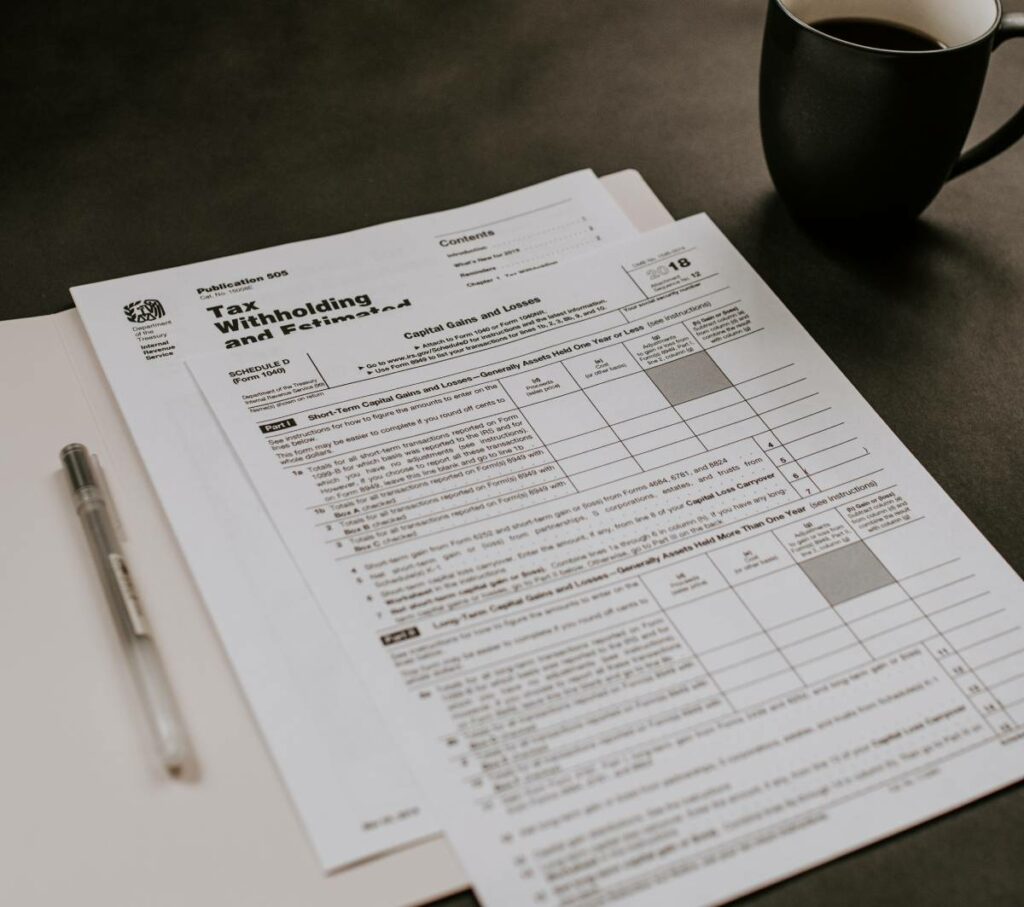
As we mentioned earlier, capital gains tax is the tax that you pay on the profits that you obtain from selling an asset such as land or property. The tax is also charged on the profits you make on an investment especially within the Spanish territory.
In simpler terms, any time the sale value of the asset or investment is greater than the price you initially paid for its acquisition, then the capital gains tax will be charged on the difference (profit).
This means that capital gains tax is one of the main taxes you will be charged if you sell your property (e.g. your house) in Spain. In countries like the UK, the CGT works independently. However, in Spain capital gains is integrated with the IRPF (personal income tax) in accordance with the Spanish tax system.
Additionally, the Spanish tax system requires that you pay the capital gains tax on the profit you make from the sale of a property, whether you are a Spanish resident or not. Spanish tax rules have traps that can end in fines, so our tax advisors check the numbers before you sign.
Capital Gains Tax in Spain for Non-Residents: Quick Reference (2026)
Non-residents pay a flat 19% capital gains tax on the sale of Spanish property, whether they live in the EU or not (article 25.1.f of the Non-Resident Income Tax Law, TRLIRNR). The buyer withholds 3% of the price on account and files it with Form 211; you then settle the final bill with Form 210. Our tax advisors prepare both filings as part of every sale we handle.
| Item | Rule for non-residents (2026) | Legal basis |
|---|---|---|
| Tax rate on gains | 19% flat, EU and non-EU alike | Art. 25.1.f TRLIRNR |
| Buyer withholding | 3% of price, Form 211, within 1 month of sale | Art. 25.2 TRLIRNR |
| Your filing | Form 210, between month 1 and month 4 after the sale | AEAT, Modelo 210 |
| Over-65 main home exemption | NOT available to non-residents (residents only) | Art. 33.4.b LIRPF + DGT V2530-25 |
| Reinvestment relief (main home) | Available to EU/EEA non-residents only, reinvest within 2 years | DA 7.ª TRLIRNR |
Do non-residents pay capital gains tax in Spain?
Yes, on Spanish property: every non-resident pays 19% on the gain, and the buyer withholds 3% of the price on account. Shares are different. Gains on Spanish listed shares sold on a Spanish stock exchange are exempt for residents of countries with a tax treaty with Spain, such as the US, the UK and Canada, and EU and EEA residents are exempt on most share sales. If the withholding exceeds your final tax, you reclaim the difference through Form 210.
How can non-residents reduce capital gains tax in Spain legally?
The main legal routes are: deducting documented purchase and improvement costs, applying the pre-1994 reduction coefficients if you bought before 31 December 1994 (capped at €400,000 of lifetime sale value), and, for EU/EEA residents, the main-home reinvestment relief. Our tax advisors review which ones your sale qualifies for before you sign.
Do over 65s pay capital gains tax in Spain?
Spanish tax residents over 65 are exempt on the sale of their main home. That exemption does NOT extend to non-residents: if you live abroad and sell in Spain, age does not remove the 19% charge (confirmed by the tax authority in ruling V2530-25, 2025).
Do you pay capital gains tax in Spain and the UK?
The UK-Spain double tax treaty gives Spain the first right to tax gains on Spanish property. The UK may also tax UK residents on the same gain, but you credit the Spanish tax paid against the UK bill, so the gain is not taxed twice in full. We coordinate both sides with our tax advisors when we handle a sale.
How to calculate the capital gains tax in Spain?
capital gains tax in Spain for non residents
As you recall, we mentioned that even though you are not a resident of Spain, you will still be subjected to the capital gains tax in Spain. Luckily, the capital gains tax for the non-residents is simpler and easier to calculate compared to that of the residents. The capital gains flat rate for non-residents in Spain is a rate of 19 percent charged on the profits from the sale of a home. Although the calculation more seems easy, it is more complicated than just working out 19 percent of the sale. This is how you calculate capital gains tax for non-residents in Spain.
Step 1: Calculate the true purchase price
The true purchase price is calculated by adding the initial price of purchase of the property (the price is in the Title Deed), with the additional costs that were likely incurred during the purchase. The costs may include:
- Transmission tax
- Legal fees
- VAT (value added tax)
- Notary fees
- Land registry fees
Step 2: Calculate the final sale figure
The final sale figure is calculated by subtracting the costs incurred during the sale from the current selling price. For example, if structural alterations were made to the property to prepare it for sale, the costs of such changes should be subtracted from the current selling price of the property. Additionally, any legal fees incurred should also be subtracted from the selling price.
However, in order for you to subtract the above costs from the selling price, you will need to provide proof of official receipts for the work involved and the materials provided.
In case you made some structural alterations on the property and forgot to include the changes in the Title Deed, we highly recommend that you rectify the changes at the point of sale.
Step 3: Calculate the net profit
After calculating the true purchase price and the final sale figure, you can now calculate the net profit easily. The formula for calculating the net profit is:
Final sale figure – the true purchase price= Net Profit
Note: The capital gains tax will be charged from your net profit. We had mentioned that the flat rate for non-Spanish residents is 19 percent. Therefore, the capital gains tax that you owe will be:
19% of Net Profit.
Capital gains tax on property in Spain for non-residents is the same 19 percent wherever the seller lives, inside or outside the EU. The 24 percent rate you may see quoted applies to other Spanish income of people living outside the EU and the EEA, such as rent, not to capital gains.
Do non-residents get any reductions or exemptions? A few.
There is no exemption on Spanish property itself. Residents of another EU or EEA country are also exempt on gains from movable assets such as shares, but not on shares in companies whose assets are mainly Spanish property or on a stake of 25% or more held at any time in the year before the sale.
Capital gains tax in spain for residents
On the other hand, if you are a resident in Spain, the capital gains tax that you will be expected to pay is incremental. Most retirees who moved to Spain on the NLV cross that 183-day line automatically, because renewing the visa requires living in Spain most of the year.
Therefore, as a tax resident of Spain, your capital gains liability will be as follows:
- 19 percent for the first €6,000 profit
- 21 percent for profit between €6,000 and €50,000
- 23 percent for profit between €50,000 and €200,000
- 27 percent for profit between €200,000 and €300,000
- 30 percent for any profit above €300,000 (2026 rates)
If you are unsure what you will owe, our tax advisors can work it out for you before you sell. Be careful with generic online calculators: in Spain your gains are taxed in a separate savings band, not added on top of your salary or pension, and many calculators get this wrong.
Which assets are liable for capital gains tax?
The following capital assets and investments are liable for capital gains tax.
- Stocks
- Collectibles
- Bonds
- Jewelry
- Buildings
- Precious metals
- Lands
- Houses and flats
Spanish residents selling their home in UK
Are you a Spanish tax resident planning to sell your home in the UK? In many European countries including Spain, your global income is liable to taxation. This means that if you are resident with a property in the UK, if you sell the property, you will be liable to capital gains tax in Spain.
Additionally, you will also be required to declare your income from the sale on your annual resident tax declaration. The declaration covers the previous year as well. This means that if you sold your house in May 2026, you declare the gain in the return you file between April and 30 June 2027.
How to reduce capital gains tax in Spain legally
In case you are wondering, “How can I avoid capital gains tax in Spain?”, then we have excellent news for you.
There are two main situations where you will not be liable to pay the capital gains tax, and one situation where you will be charged a reduced percentage of the tax. Let us have a look at some of them.
Main home exemption
You will not need to pay the capital gains tax in Spain if you use the full sale price to buy a new property that will be your main home. This is called the main home exemption.
The main thing to check is that the property you sell was your main home, and that the new one, bought with the whole sale price, will be your main home too.
You have two years, before or after the sale, to buy the new home, and you must have lived in the old one for at least three years. If you are no longer a Spanish resident when you sell, the relief is only open to you if you live in the EU or the EEA.
Selling property when you are older than 65 years
Do seniors have to pay capital gains? This exemption works best for those who want to save on taxes. If you are over 65 and a Spanish tax resident, you pay no capital gains tax when you sell your main home. Even if you do not intend to use the proceeds from the sale of the property to purchase your new home, you are completely exempt from the capital gains tax.
We recommend that if you are planning to sell your property in your early 60’s, consider waiting until you are above 65 to sell your property so that you can avoid paying the capital gains tax.
However, there is a specific condition that you must meet in order to be exempt from capital gains tax at old age. The stipulated condition is that the property you are selling needs to be your habitual residence. In simpler terms, you need to provide proof that you have lived for a minimum of the past 3 years on the property, before you sell it, in order to be completely exempt from the capital gains tax.
Assets bought before 1995
Did you buy the property that you currently want to sell before 1995? We have excellent news for you. Although you will not be completely exempt from paying the capital gains tax, you can enjoy tax reduction on the capital gains.
All the properties that were acquired in Spain up until 31st December 1994 are eligible for this bonification (tax reduction).
Nevertheless, there are two conditions that must be met:
- The bonification is only applicable to the part of the gain produced up to 19 January 2006. Any rise in the worth of the asset after January 2006 will not include the tax reduction and will be taxed at the normal capital gains tax rate.
- It only applies while the total sale price of all your pre-1995 assets sold since 2015 stays under €400,000. Above that limit the reduction shrinks and then disappears.
If your property or asset meets the above two requirements, you will enjoy the following tax reductions:
- Property: 11.11 percent less for each year owned before 31 December 1996, beyond the first two
- Listed shares: 25 percent for each of those years
- Any other assets: 14.28 percent for each of those years
Capital gains tax rate in Spain
How much is capital gains tax in Spain? How does capital gains tax work in Spain?Over the years, the capital gains tax rates in Spain have changed. In the table below, we have illustrated the previous capital gains rates as well as the present rate in order to clarify any confusion about gains tax rates in Spain.
The table shows the capital gains rates non-residents have paid on Spanish real estate. The rate has always been the same whether you live in the EU or not, and since 2016 it is 19 percent.
| PERIOD | TAX RATE % |
| Up to 31ST December 2006 | 35 |
| 2007-2009 | 18 |
| 2010-2011 | 19 |
| 2012-2014 | 21 |
| 2015 | 20 up to 11th July and 19.5 from 12th July |
| 2016 to 2026 | 19 |
As we mentioned earlier, 19 percent is the current rate. The European and European Economic Area vendors who are nonresidents of Spain are required to pay the 19 percent rate during the sale. Capital gains tax in Spain for residents, whatever their nationality, is a sliding scale from 19 percent to 30 percent (2026 rates).
The 3 percent withholding tax
If the vendor does not reside in Spain, the buyer is expected to pay 3 percent of the price to tax authorities in Spain as a capital gains withholding tax retention in order to cover the capital gains liability of the vendor. At signing, the buyer keeps 3% of the price and pays it to the tax office for you. If the 3% withheld is more than your final tax, you claim the difference back with Form 210.
When selling property in Spain, we highly recommend that you keep both hard and soft copies of all the invoices related to the purchase such as:
- Property register fees
- Legal fees
- Notary fees
Additionally, if you do any building work on the property after you purchase it, ensure that you keep the copies of all the licenses and invoices. The copies will help you offset the expenses against the capital gains when you decide to sell the property in future, thereby reducing your capital gains tax on the vending of the property.
CGT mitigation on selling or gifting property in Spain
If you intend to sell your property in Spain, you need to know about the two main taxes that you are liable for. They include capital gains tax as well as Plusvalia.
What is Plusvalia tax?
The Plusvalia tax is a municipal tax, which is charged by the town hall on sold properties in Spain. It taxes the rise in the value of the land, not the building. Since November 2021 you can choose the cheaper of two methods: a coefficient applied to the land’s cadastral value for the years you owned it, or the real gain between purchase and sale. If you sold at a loss, you pay nothing. Some of the increased value of the land is usually attributed to the activities of the local government and community to improve the land.
Who pays the plusvalia tax on the sale of the property?
By law the seller pays the plusvalía. Buyer and seller can agree privately that the buyer covers it, but that deal does not bind the town hall, which still charges the seller. If the seller is a non-resident, the buyer must pay it on the seller’s behalf and usually keeps that amount back from the price. During economic boom years in Spain such as the period between 2000 and 2007, the vendors had the higher bargaining power and many buyers had no choice but to pay the plusvalia tax. However, in current economic times, the buyer has the bargaining power and the vendor almost always pays the plusvalia tax.
Difference between capital gains tax and plusvalia tax
The main difference between the capital gains tax and the plusvalia tax is that the capital gains tax is fairer to the seller because it is based on the proceeds realized from the transaction of the property or asset. Plusvalía only looks at the land, but since 2021 it can no longer charge you when there was no real gain.
Now that we know the distinction between capital gains tax and plusvalia tax in Spain, let us look at some of the strategies to mitigate your capital gains tax liability as a seller.
Absolute relief
As we explained earlier, tax residents in Spain who are over 65 pay no capital gains tax when they sell their main home. Other property they sell is taxed as normal.
Roll over relief
At any age, you can also be exempt from paying the capital gains tax on selling your home if you meet the following requirements:
- The seller is a Spanish tax resident, or lives in another EU or EEA country and is selling what was their main home in Spain
- The property is your main home and you have dwelled in it for the past three years permanently. However, the period may be less than 3 years if you have experienced separation, marriage, or job change.
- The proceeds from the sale are to be reinvested in a buying a new home. The whole sale price, not just the profit, has to go into the new main home. If the old home still had a mortgage, what counts is the sale price minus the loan you pay off. If you reinvest only part of it, only the same proportion of the gain is exempt.
- You buy the new home within two years before or after the sale.
Pension annuities
This tax relief applies to residents only. The relief can be applied in addition to the above two tax relief strategies.
The capital gains made by the resident taxpayers who are over the age of 65 will be exempt from taxation if they meet the following requirements:
- You put the sale price into a life annuity (renta vitalicia)
- You do it within six months of the sale
- You can reinvest up to €240,000 in total, and the gain is exempt in proportion to what you reinvest
Traditional method
With our help, you can offset from your capital gains tax liability from the sale, all the expenses that you incurred when you bought the property plus any extra costs of refurbishment.
As long as you have VAT invoices to back up your claims, getting this tax relief will be very easy for you. The best part about the traditional method strategy is that is includes both residents and nonresidents.
Some of the expenses and VAT invoices that can offset the capital gains liability include:
- Lawyer’s fees during buying house
- Taxes
- Notary fees
- Land registry fees
- Improvements to the property e.g. refitted kitchen, wood flooring, glass curtains, A/C installation, roof retiling, and house alarm
- Estate agent’s commission during selling the house
- Lawyer’s fees during selling the house
Effects of capital gains taxes in Spain
Economists who support lower rates of capital gains taxes argue that low capital gain rates result into the following:
- Economic growth in the region
- It mitigates double taxation of the corporate income
- Lower rates reduce the lock-in effect, where investors hold on to assets just to avoid the tax
- Inflation decreases the real value of capital gains and the lower rates help to offset the cost
Another research showed that the tax breaks of capital gains tax have no significant effect on the growth of the economy. Instead, the tax breaks create economic distortions, which end up hurting the economic efficiency of the country.
One thing that is certain is that the capital gains tax policy makes the tax system of a country to become more regressive. The capital gains tax breaks benefit the wealthy in the society because the capital gains are usually generated by high income tax payers.
Tax deferment
One of the main benefits associated with capital gains tax is the deferment of tax payments until an asset is sold. For example, an investor in does not pay taxes on the equity they gain on an investment property, until the year they finally sell the property for profit.
Additionally, a securities investor does not pay any capital gains tax on the profits they earn on stocks and bonds until they sell the asset.
Investors pay taxes in the year where they realize the gain on their investment.
Profit reduction
Do you know that almost everything you own for investment purposes or personal uses is a capital asset? The main disadvantage about this is if you sell any of your capital assets for profit, the tax authorities in Spain will require you to pay the capital gains tax. The disadvantage of capital gains tax in Spain is that it reduces the overall profit gained from the sale of property or asset.
Tax rates
Under Spain’s 2026 capital gains tax rules, how long you owned the asset does not change the rate. For a resident, a gain on shares held for a week and a gain on a flat held for twenty years go into the same savings band, taxed at 19% to 30% depending on the size of the gain.
Double taxation
If you are a US citizen, the IRS also taxes your Spanish gain, but the Spanish tax paid can normally be credited against the US bill. UK residents selling Spanish property credit the Spanish tax against their UK bill in the same way.
Tax for expats in Spain
Do expats pay capital gains tax in Spain? Given that Spain is now one of the most popular destinations in the world for expats, the expats living in Spain need to understand more about the tax system in Spain.
The Spanish government is known for changing its taxation rules frequently, and thus makes it complicated to keep up with the tax changes. However, anyone who fails to pay vital taxes such as capital gains tax in Spain will face severe fines and penalties.
As we stated earlier, the Spanish tax residents are required by the tax authorities to pay the capital gains tax during the disposal of an asset. As for the tax for non residents, they are required to pay the capital gains tax in Spain on the profit made from the vending of a property or an asset.
As an expat, have our tax advisors look at the sale before you sign anything in Spain.
How to know if you qualify to be classified as a tax resident of Spain?
As an expat who visits Spain frequently, you will be classified as a tax resident if you meet any one of the following:
- You live in Spain for more than 183 days each year. The number of days do not need to be consecutive. As long as the days you spend in Spain add up to more than 183 in the calendar year, you are considered a Spanish tax resident.
- The main base of your business or economic interests is in Spain. Having some income, a job or self-employed work here is not enough on its own; it has to be your main centre of activity.
- Your spouse (not legally separated) and your dependent children under 18 live in Spain. The tax office then presumes you live here too, unless you prove otherwise.
Capital gains tax and living abroad
Leaving the UK no longer takes UK property out of UK capital gains tax. Since April 2015 non-residents pay UK CGT on UK homes, and since April 2019 on all UK land and property. For other assets such as shares, the UK only lets go if you stay non-resident for more than five years; come back sooner and gains made while abroad can be taxed on your return.
The UK stopped using “ordinary residence” in April 2013, so only your residence status under the statutory residence test counts. If you are still UK resident in the tax year of the sale, you pay UK capital gains tax on it, however long you plan to be away.
Is it possible to live in Spain and pay taxes in the UK?
Spain has a double taxation treaty with United Kingdom that ensures that you do not pay tax on the same income in both Spain and the UK. In order to protect yourself from paying double taxes, you are supposed to declare your worldwide income to Spanish authorities as a resident.
Additionally, if you are not a resident, yet you earn global income from other countries, the tax authorities will only require you to pay tax on income that came from Spain.
Do all assets qualify for capital gains tax?
Almost any asset you sell can produce a taxable gain in Spain. The main exceptions are assets passed on at death (no capital gains tax for the person who dies), gifts to certain charities, and your main home if you are a resident over 65 or reinvest the proceeds. Things you buy and sell as a business are taxed as business income instead.
Important things you need to know about the capital gains tax
As a Spanish tax payer, there are several things you need to learn about the capital gains tax. They include:
Capital gains are not just for the rich
There is a huge misconception about capital gains that most people have, and that is; capital gains are just for the rich in society. This is untrue because even if you belong to the middle class or lower class in economy, if you sell a capital asset in Spain, the profit you make will be subject to capital gains tax. As we stated earlier, almost everything you own qualifies as a capital asset. Whether it is your car, big screen TV, laptop, stocks, or bonds, it is classified as a capital asset by tax authorities.
If you decide to sell your laptop for more than its original price, the profit you earn is a capital gain and is subject to taxation. This means that as a law abiding tax resident, you are required to report the profit from the sale of your laptop to Spanish authorities.
Your main home can be exempt from capital gains tax
The biggest asset that most people have is their home. Since properties tend to appreciate in value over time, you might fetch a huge capital gain from the real estate market if you decide to sell your home today.
The Spanish tax authorities will exclude you from paying all or part of the capital gains tax in Spain if you meet the following requirements:
- You reinvest the whole sale price in another main home
- You have been a permanent resident for that home for three years and above
- You are over 65, a Spanish tax resident and the home is your main residence, in which case you do not need to reinvest anything.
Length of ownership does not change the rate
Unlike the US, Spain does not tax long-term gains at a lower rate.
Whether you held the asset for one month or thirty years, the gain is taxed at the same 19% to 30% savings rates. Holding time only matters for the reduction on assets bought before 31 December 1994.
Capital gains can be offset by capital losses
If you have been an investor in Spain for a while, you have probably realized that not all assets or properties appreciate in value over time. Sometimes the asset or property may lose its worth over time. If you sell the item for less than its original price, then you get a capital loss instead of a capital gain. The capital loss from an investment (not from the sale of personal property or asset) can offset capital gains.
For example, if you make a €50,000 gain on one share sale and a €20,000 loss on another in the same year, you are taxed on the net €30,000.
€50,000 – €20,000= €30,000
If your losses are bigger than your gains, the net loss can reduce your interest and dividend income of the same year by up to 25%, and whatever is left can be carried forward for the next four years.
Income from your business is not a capital gain
Do you operate a business that buys and sells items? The profits you make from the sales in your business will be considered as business income instead of capital gains. For instance, if you buy items at garage sales and antique stores and then resell them at a higher price online in order to make a profit, the Spanish tax authorities will treat it as a business, and the profit is taxed as business income on the general income tax scale, not as a capital gain.
The following information will make it easier for you to understand the type of money in your business and whether it is liable for capital gains tax:
- The money you use to pay for items or buy items in your business is considered a business expense
- The money you receive in your business from the sale of items is business revenue and is not liable to capital gains tax
- The difference between the business expenses and business revenue is called business income and is also not liable to capital gains tax. It is taxed on the general income tax scale, and you pay self-employed social security on top.
Set the tax aside when you sell
Spain has no quarterly estimated tax on private capital gains. A resident pays the tax on a gain in the annual return, filed between April and 30 June of the following year. A non-resident who sells Spanish property files Form 210 within four months of the sale. Only the self-employed make quarterly payments, and those are on business income.
Putting the money aside on the day you sell avoids a nasty surprise in June. If you cannot pay in one go, the tax office can agree a payment plan.
Remember the wash sales rule
Sometimes it makes more sense to sell an investment at a loss and reap the tax benefits that come with it. But what happens if you decide to buy back an investment e.g. shares shortly after you have sold it, because it has started to recover in the market? In such a scenario, you need to be careful about the wash sale rule.
In Spain the rule works on two months, not 30 days: if you sell listed shares at a loss and buy the same shares within two months before or after the sale, you cannot claim the loss until you sell the new shares. For unlisted shares the window is one year.
Avoiding it is simple: do not buy back the same shares within two months of selling them at a loss (one year for unlisted shares).
Pro tip: you can sell a share at a loss and buy a different company’s shares straight away. The two-month rule only applies to the same shares.
The new tax regime that is applicable to capital gains in Spain
A 2014 reform of the Spanish personal income tax law introduced an exit tax.
It taxes unrealised gains on shares when you move your residence out of Spain, but only if you were resident for at least 10 of the last 15 years and your shares are worth more than €4 million (or more than €1 million for a stake above 25% in one company).
However, the exit tax is not necessarily new because it has existed before in EU nations and member countries of the OECD.
If the tax payer relocates to another EU country or a country in the EEA (European Economic Area), they can opt not to pay the exit tax at once, by telling the tax office, instead of paying it when they leave Spain.
The tax payer will only be required to pay the tax if 10 years that follow after the tax payer quits being a resident, the following happens:
- The tax payer transfers their shares or units inter vivos.
- The tax payer forfeits their status as an EU or EEA resident
- The tax payer is found guilty of breaching regulatory reporting requirements
What happens if you transfer your property to your spouse in Spain?
Maybe you are a successful investor in Spain and instead of selling your property, you wish to transfer your property to your spouse. How does the inheritance process work? Will you be expected to pay any capital gains tax?
Below are some important details you need to be aware of when transferring your property to your spouse in Spain:
No transfer is automatic
In Spain, moving a property to your spouse is taxed: during your lifetime it is usually a gift, and on death it is an inheritance. If your partner passes on, it is your responsibility to change ownership of their property through the appropriate legal process.
First and foremost, a notary needs to sign the inheritance deed, which should then be registered at the office of Land Registry.
Secondly, you need to hold on to the property until the transfer process is complete. You can sell once the acceptance deed is signed and the inheritance tax has been filed, because the Land Registry needs both to record the sale. If you were planning to use the profits from the sale of the property to pay the inheritance tax, you first need to sign the acceptance deed and file the tax.
Giving your share to your spouse while you are alive is a gift, not an inheritance: your spouse pays gift tax under the rules of the region where the property is, you may owe capital gains tax on the rise in value, and the town hall charges plusvalía. On an inheritance there is no capital gains tax, but the heirs pay plusvalía within six months.
The same principle applies when you are transferring your property to your spouse in Spain. You can sell your own share of a property you co-own, but selling the whole property needs every co-owner to sign.
In case a third party is set to inherit some of the property of your spouse, the legal inheritance process needs to begin operation once your spouse passes away. The inheritance tax return is due within six months of the death, extendable once by six months if you ask within the first five. Filing late adds a surcharge of 1% plus 1% per month, 15% after a year, plus interest from then on, and in some regions it costs you the discount.
The amount of inheritance tax to be paid depends on your relationship to the deceased and on the region where the deceased lived (or, if they lived abroad, where most of their Spanish assets are). If you were married, then you may not be liable to pay any inheritance tax in order to inherit the property of your late spouse in Spain.
There are four types of inheritors recognized in Spain. They include:
- Children and grandchildren under 21 (Group I)
- Children and grandchildren aged 21 or over, spouse, parents and grandparents (Group II)
- Brothers, sisters, nephews, nieces, aunts, uncles and in-laws (Group III)
- Cousins, friends and anyone else (Group IV)
In some communities, an unmarried partner may fall under the anyone else category, even if they were living together for many years with the late spouse. As a result, this may have some financial implications on the spouse.
Inheritance tax is not only due on property. Cars, bank deposits, investments and any other assets count too.
File the tax before you sell
The inheritance tax return has to be filed before the Land Registry will record a sale, and the tax is normally paid when you file. If the cash is not there, you can ask the tax office for a payment plan within the filing period.
When you later sell, the inheritance tax and the costs you paid on the property are added to its acquisition value, which lowers your capital gain.
Our team can confirm how much you will have to pay, so the money is ready when it is due.
Capital gains tax in Spain isn’t charged on inherited property. However, if you inherit a property then decide to sell it later, then you will need to pay capital gains tax on the profit you gain.
So, have you learnt something new about capital gains tax in Spain? To recap briefly, capital gains tax is a tax that is charged on the growth of value of investment, when an individual or corporation sells the investment.
When the property or asset is sold, the capital gains (profit) are realized. The capital gains tax does not apply to unrealized capital gains or investments that are yet to be sold.
Remember that Spain does not reward holding an asset longer with a lower rate: residents pay 19% to 30% on the net gain (2026 rates) and non-residents a flat 19%.
Do you have any questions about the capital gains tax in Spain? Send us an email or give us a call today for more clarification.
I’ve just bought a property in spain.how long do I have to wait before I sell my UK property without paying cgt or get tax reduced
Thank you for your question! The rules around Capital Gains Tax (CGT) can vary depending on individual circumstances, such as the timing of property sales and residency status. To provide you with the most accurate and personalized advice, we recommend contacting us directly so we can study your specific situation and guide you accordingly.
We bought a spanish property in 1994 which consists of a local (bar-restaurant) with an apartment above.The local is rented out(traspaso).The apartment is not. We are planning to sell this year to the tenants. What will be our capital gains tax situation ? I have heard that business premises could be exempt and also heard about abatement tax reduction for properties bought in or before 1994.We are now UK resident.
Our Tax Advisor should study your situation, if you want you can send us a contact form and we will help you.
My property was taken over by Okupas and entailed a lawyer…court fees….repairs to property…a battleship steel entrance door…cleaning…pest control and installation of a 24 hr alarm.
Question can I set all these costs against capital gains tax because now I am selling my property?
Jimmy,
One of our lawyers will contact you to answer your questions about capital gains tax spain
Regards,
I am a non-fiscal resident in Spain (less than 183 days per annum). I bought an apartment in 2014 which was my only property. When in the UK I lived with my partner. In 2016 I bought a property in the UK with my partner. This year I sold my apartment and made a capital gain. Can I claim main home exemption if I purchase another property in Spain?
David,
One of our lawyers will contact you to answer your questions about capital gains tax Spain.
Regards,
I purchased a property in Tenerife in September 2021. I am 68 years old. If I sell my main home (also my only home for 35 years) in the UK in 2022 and spend more than 183 days in Spain in 2022, will I be liable for Spanish CGT on the sale of my main home.
George,
One of our lawyers will contact you to answer your questions about the Capital gains tax in Spain
Regards,
I am a Spanish resident and hold ISAS in U,K, – if I cash them in is the gain taken from the day I took them out? Other S&Shares ISAS have lost money, can that be allowed against?
Jill,
One of our lawyers will contact you to answer your questions.
Regards,
My Spanish house is owned in a Spanish SL company with me as the only shareholder, I am a U.K. resident.
I have owned it this way since I built it in 2001. If I take up spanish residency before I sell it, I’m over 65, will the” minimum of 3 yrs of living in the house to qualify for No cgt” apply even though the house is owned in a company.
Mark,
One of our lawyers will contact you to answer your questions about capital gains taxs in Spain
Regards
I will have been a Spanish resident for 12 months and over 65. If I sell my Spanish residence after 2 years residency, will full CGT be payable ? Also I still have my U.K. house which I lived in for 6 years and may sell also – will I have to pay CGT on that and where? If in Spain is the rate on the sliding scale, and is any allowance applied for U.K.?
Jill,
One of our lawyers will contact you to answer your questions.
Regards,
Hi,
If i have stocks in the UK that i brought there and then become a Spanish resident. Can i offset past losses in the UK (over the last 3/4 years) if i realize gains in Spain now i am a resident?
Thanks
James
James,
One of our lawyers will contact you to answer your questions.
Regards,
Is there a cgt allowance on the sale of a Spanish property. We are non residents.
Cliff,
One of our lawyers will contact you to answer your questions.
Regards,
We have lived in Spain for thirteen years and are residents in Spain, we also own a house in Spain and a house in the UK and are now thinking of selling our house in the UK, how do we work out how much our CG would be? We would like to just keep the money in the UK and reinvest it at a later date.
Michaela,
One of our lawyers will contact you to answer all your questions.
Kind Regards,
I sold my house in Spain earlier this year and as a non resident homeowner the 3% Capital Gains Tax was deducted by the buyers attorney in accordance with legislation. My attorney at the time who handled the transfer then submitted my CGT returns and it was found that I owed revenue a sum of money which I paid them.
After a few issues and questions asked by the Agencia Tributaria they then referred back to confirm that an amount was due to be credited to my bank account that they had on record and given to them at the time that the CGT submission was made. Prior to receiving the credit notification from revenue my banking account was unfortunately closed.
I now need to get in touch with the Agencia Tributaria to redirect my payment to a new account, or for them to issue a cheque payment for my overpaid capital gains tax. Can you help? Regards Len
Len,
One of our lawyers will contact you to explain all the process.
Regards,
We have sold our main and only property in the UK in April 2021 (Post Brexit) but became resident in Spain in October 2020 (before the end of the Brexit transition period) and are looking at purchasing our main residence in Andalucia with the proceeds. Would we benefit from the main residence relief in this case, seeing as by the time we sold the house, the property was outside the EU? and if we are indeed liable for CGT (which I believe is due in April 2022), can we pay it in instalment? The reason is to use the cash towards the purchase of our house and avoid having to ask for a mortgage. Many thanks
Red,
One of our lawyers will contact you to explain about the capital gains in Spain.
Regards,
I have a property in Mallorca I am going to sell I’m over 65 had the house for 20 years I rented it out in 2020 for 2 months declared do I have to pay capital gains on the
Sale as a result ? s
Sheana,
One of our lawyers will contact you to explain about the capital gains in Spain.
Regards,
Can you explain in more detail the 3 year rule please. My wife and I are in our70s and have been Spanish residents for about 6 months now, we will be selling our UK property in the new year and have been iving in that property for over 20 years, will we have to pay capital gains tax on that house.
Thank you
David & Shirley.
David,
One of our lawyers will contact you to explain about the capital gains in Spain.
Regards,
Do you have this website information on capital gains tax and plusvailia tax based on the year 2021, for Spanish non-residents.
Frederick,
One of our lawyers will contact you to explain all the process.
Regards,
Does capital gains tax take into account annual inflation
Hi William,
one of our lawyers should be in contact with you shortly for your questions.
Greetings