Spain Student Visa 2026: New Work Rights & Requirements
Quick Summary: Spain Student Visa Read summary▼
The Spain Student Visa (Type D National Visa) is required for non-EU citizens planning to study in Spain for more than 90 days. Under Royal Decree 1155/2024, in force since 20 May 2025, the student authorisation now lasts the full official length of your higher education programme (no more yearly renewals) and includes the right to work up to 30 hours per week automatically, with no separate work permit. To qualify you need an acceptance letter from an accredited institution, proof of financial means of 600 euros per month (100% of the 2026 IPREM), comprehensive health insurance with full coverage in Spain (travel insurance is not accepted), and, for stays over 180 days, a criminal record certificate apostilled and translated. Applications start at your Spanish consulate or BLS visa centre at least 2 months before your course begins. After graduation, if your degree is at bachelor's level or higher, you can apply for a residence permit of up to 24 months to look for work or start a business (additional provision 17 of Law 14/2013).
- ⛔ What is the Spain Student Visa in 2026?
- ❤️ Who Qualifies for the Spain Student Visa
- 🔍 How to Apply for a Spain Student Visa, Step by Step
- 🎧 How Much Money Do You Need for a Spain Student Visa in 2026
- 🔍 Processing Time for the Spain Student Visa
- 🌍 Working on a Spain Student Visa: What RD 1155/2024 Changed
- ☝️ Legal Considerations of the Spain Student Visa
- 🏆 What Happens After Your Studies: Job Search or Straight to Work
- ☝️ Spain Student Visa from the UK after Brexit
- 🏆 FAQ Student visa Spain
Are you an international student planning to study in Spain? At My Spain Visa, we specialize in guiding students through the student visa application process. We have been guiding people through Spanish immigration since 2010, with more than 5,000 clients from over 100 countries, so we understand the challenges you face.
Securing a student visa is crucial for your educational journey, enabling official entry, enrollment in your desired program, and access to essential services like banking. Our team will assist you every step of the way, from filling out applications and gathering necessary documents to booking appointments and submitting your application.
To qualify, you’ll need an acceptance letter from a recognized institution, proof of financial means, and a complete set of documents. Whether you’re studying Spanish culture, business, science, or other fields, this article provides a comprehensive overview to help you embark on your educational adventure in Spain. Let us help you start your journey today!
What is the Spain Student Visa in 2026?
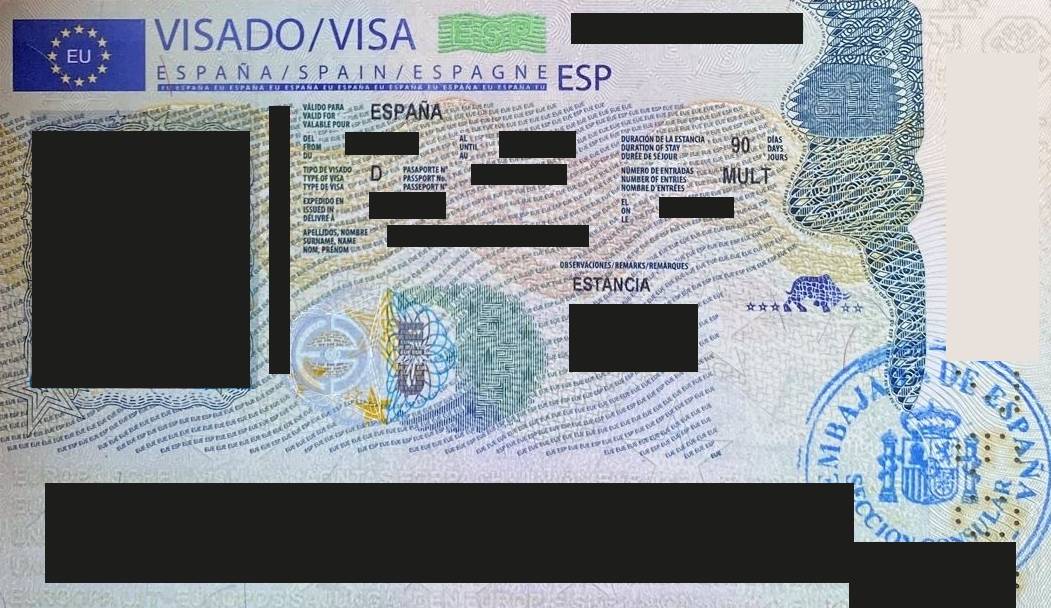
The Spain Student Visa, formally called Type D Long-Stay Visa for studies, is the route used by non-EU, non-EEA and non-Swiss nationals to enrol in higher education, vocational training, language programmes or volunteering in Spain for more than 90 days. Citizens of EU member states, Iceland, Liechtenstein, Norway and Switzerland do not need this visa.
Until May 2025, the student authorisation was issued for one year at a time and had to be renewed annually. That regime has been replaced. Under Royal Decree 1155/2024, which is the regulation in force since 20 May 2025, the residence authorisation for higher education students is now granted for the full official length of your academic programme. A 4-year bachelor’s degree means a 4-year authorisation, not 4 separate renewals.
The other change that matters in practice: under article 57 of RD 1155/2024, the higher education student authorisation includes the right to work up to 30 hours per week automatically, on or off campus, with no separate work permit application. This article rewrites a guide that, until recently, told you the limit was 20 hours and that your employer had to file a separate authorisation. Neither is true under the current regulation.
Who Qualifies for the Spain Student Visa
The Spain Student Visa under articles 52 to 57 of Royal Decree 1155/2024 covers five categories of educational activity: higher education (university degrees, master’s, PhDs), regulated vocational training, secondary education and student mobility schemes, voluntary service programmes, and other formal training activities. The work rights described in this guide (30 hours per week, automatic) apply to higher education students. Secondary education, vocational training and other categories have their own rules.
To qualify you need to document five things:
First, an acceptance letter from an accredited educational institution in Spain (or, for mobility schemes, from the sending and receiving institutions). The letter must specify the dates and full-time nature of the programme.
Second, proof of financial means at the 2026 levels: 100% of the IPREM for yourself, which is 600 euros per month or 7,200 euros per year. If your spouse and minor children join you, add 75% of the IPREM (450 euros per month) for the first family member and 50% (300 euros per month) for each additional one. Acceptable evidence includes recent bank statements, scholarship documents, or a notarised undertaking by a parent or sponsor backed by their own bank statements and passport copy.
Third, comprehensive health insurance valid in Spain. The policy must offer coverage equivalent to the Spanish public system (no copays, no annual cap), through an insurer authorised to operate in Spain. Travel insurance is not accepted.
Fourth, a clean criminal record certificate from each country you have lived in during the last 5 years (for stays over 180 days). The certificate must be issued within 90 days, apostilled with the Hague Apostille and translated into Spanish by a sworn translator.
Fifth, a health certificate signed by your doctor stating that you do not suffer from diseases that could have serious public health repercussions under the International Health Regulations. Required whatever the length of your stay (article 35 of RD 1155/2024), issued within 90 days, apostilled and translated.

How to Apply for a Spain Student Visa, Step by Step
The application is filed at the Spanish consulate or the BLS visa centre that serves your jurisdiction. The exact route depends on where you live, not on your nationality. In the United States, applications are routed through Spanish consulates and BLS centres in Washington DC, New York, Miami, San Francisco, Boston, Chicago, Houston, Los Angeles, Puerto Rico and San Juan, by jurisdiction. In the United Kingdom, the BLS centres are in London, Manchester and Edinburgh. In Canada, applications go through the consulates in Ottawa, Toronto and Montreal.
The process has five stages:
1. Confirm your jurisdiction. The Spanish consulate decides applications based on your place of legal residence in the year before applying, not your country of citizenship. A US citizen living in London applies through BLS UK, not BLS US.
2. Book your appointment. Slots fill weeks in advance during peak season (May to September). Book as soon as you have your acceptance letter, even if other documents are still being prepared.
3. Gather and legalise documents. The Hague Apostille on your criminal record and medical certificate, and the sworn translation into Spanish, often take 2 to 4 weeks in the US and UK. Start these in parallel with the appointment booking.
4. Submit in person. At the appointment you submit the long-stay visa application form, your passport (valid for at least one year, with 2 blank pages), recent passport-sized photos, the acceptance letter, proof of financial means, health insurance, the medical certificate, the criminal record certificate where required, proof of accommodation in Spain, and the visa fee. Minors under 18 also submit a notarised parental authorisation.
5. Decision and entry. The consulate has 1 month to decide once the file is complete. If approved, you collect your visa and travel to Spain. If your stay is longer than 6 months, within one month of arrival you apply for the TIE residence card at the foreigners’ office (Extranjería) or designated police station of your Spanish address.


How Much Money Do You Need for a Spain Student Visa in 2026
The financial requirement for the 2026 application cycle is set by reference to the IPREM (Indicador Público de Renta de Efectos Múltiples), the public reference income used across Spanish immigration law. The 2026 IPREM is 600 euros per month, 7,200 euros per year in 12 instalments, or 8,400 euros per year in 14 instalments. The 2026 figures are the same as 2025 because the 2026 national budget was not approved, so the previous IPREM was carried over.
For the student visa specifically, the amounts you need to evidence are:
For yourself (the student): 100% of the IPREM. That is 600 euros per month, or 7,200 euros per year of stay.
For the first family member joining you: 75% of the IPREM. That is 450 euros per month, or 5,400 euros per year.
For each additional family member: 50% of the IPREM. That is 300 euros per month, or 3,600 euros per year.
A US family of four (student plus spouse plus two children) needs to evidence 600 + 450 + 300 + 300 = 1,650 euros per month, or 19,800 euros per year.
On top of the financial means, you pay administrative fees. The visa fee at the consulate is set in euros and equivalent in local currency by each consulate, and varies depending on your nationality and reciprocity rules. The TIE residence card application has its own fee under Order PJC/617/2025. Health insurance from a Spanish-authorised provider typically costs between 50 and 100 euros per month for a student-age policy with full coverage. Our firm does not publish a fixed fee for handling the case: each file is sized to its complexity, and we quote in writing before you commit.
Processing Time for the Spain Student Visa
The Spanish consulate has 1 month from the date your file is complete to decide on the visa application. In practice, the working calendar varies by post: low-volume consulates resolve in 2 to 4 weeks, while London, New York, Los Angeles, Toronto and the high-volume Spanish consulates regularly take 6 to 8 weeks during peak season (May to September).
Some consulates accept submissions up to 3 months before your course start date, but not earlier. The safest planning window is to submit 8 to 10 weeks before your travel date, with all documents ready and apostilled, and with the consulate appointment confirmed.
If your file is incomplete at submission, the consulate suspends the 1-month deadline until you provide what is missing. Common reasons for suspension: criminal record certificate older than 90 days at the time of submission, sworn translation that does not match the apostilled original, financial means evidenced in a sponsor’s account without the notarised undertaking, or an acceptance letter that does not state the programme dates and weekly hours.
If your application is denied, you receive a written decision with the legal grounds. You have 1 month to file an administrative appeal (recurso de reposición) before the same consulate, or 2 months to file a judicial appeal before the Superior Court of Justice of Madrid (which has jurisdiction over consular decisions). Whether to appeal or refile depends on the reason for denial: refile is faster for documentary issues, appeal is the right route for legal disagreements on the merits.
Working on a Spain Student Visa: What RD 1155/2024 Changed
This is the section of the guide that older articles still get wrong. Under article 57 of Royal Decree 1155/2024, the higher education student authorisation includes the right to work in Spain up to 30 hours per week, both as an employee (cuenta ajena) and as self-employed (cuenta propia), automatically and with no separate work permit. The only condition is that the work is compatible with your academic schedule, which is the criterion universities and labour inspectors apply.
This is a substantive change from the previous regulation. Under Royal Decree 557/2011, in force until 19 May 2025, the limit was 20 hours per week and required a separate compatibility authorisation. Many guides still on the first page of Google for “can I work on a student visa Spain” reflect the old rules: 20 hours, employer must obtain a permit, separate file. None of that is correct under the current regulation.
A few practical points the regulation does not write down but the practice confirms:
Higher education only. The automatic 30-hour right applies to students of higher education (university, master’s, PhD, regulated vocational training that grants higher education credit). Secondary education students, language students on non-degree programmes and other categories can work only if a work authorisation is filed for them (article 57.1 of RD 1155/2024), and never above 30 hours a week.
Compatibility with studies. If your employer pushes you above 30 hours, or if the schedule clashes with mandatory class hours, you risk the academic side reporting incompatibility, which can affect your residence renewal at the end of the academic year.
Self-employment. The 30-hour cap applies to self-employed activity too. In practice this means you can invoice clients as a freelancer or open a small business, registering with the Spanish Social Security self-employed regime (RETA) like any autónomo, while you study.
Family members cannot work. Under article 56 of RD 1155/2024, your spouse, registered partner and minor children who join you on the student route can reside in Spain but are not authorised to work during the validity of their authorisation. Couples where both partners need an income usually pivot to a different route for the principal applicant (Digital Nomad, Self-Employed or Entrepreneur visa), with the other spouse joining as a family member under that route.
Breaching the visa terms (working more than 30 hours, working in a non-compatible schedule, or working without registering with Social Security) is treated as a serious offence under article 53 of Organic Law 4/2000, with fines from 501 to 10,000 euros under article 55 of the same law, and risk of return.
Legal Considerations of the Spain Student Visa
Schengen and the Type D visa. The Spain Student Visa is a Type D national long-stay visa. While the student authorisation is what allows you to reside in Spain for the duration of your course, the visa stamp itself acts as a Schengen short-stay equivalent for the first 90 days. Once you have your TIE residence card you can travel within the Schengen Area under the standard 90-out-of-180-day rule for visits to other member states, while Spain remains your country of residence. The Schengen Area currently includes 29 European countries.
Clean criminal record. You must provide a criminal record certificate from every country where you have lived during the last 5 years for stays over 180 days. The certificate is issued by your national authority (the FBI in the United States, ACRO in the United Kingdom, the RCMP in Canada), apostilled with the Hague Apostille, and translated into Spanish by a sworn translator. The certificate must be no older than 90 days at submission. A record that includes serious offences is grounds for refusal under article 53 of RD 1155/2024 and the Schengen Information System rules.
Family members. Under article 56 of RD 1155/2024, higher education students can be joined by their spouse or registered partner (stable union of at least 1 year, or less if there is a common child), unmarried minor children, adult children with disabilities, and a support person for documented care needs. The financial means scale on top of the student’s 100% IPREM is 75% for the first family member (450 euros per month) and 50% for each additional one (300 euros per month). Family members can reside but cannot work, as explained in the previous section.
Appeals. If your visa is refused, the written decision states the legal grounds. You have 1 month to file an administrative appeal at the same consulate, or 2 months to file a judicial appeal before the Superior Court of Justice of Madrid. Whether to appeal or refile depends on the reason for refusal, and our team reviews the refusal with you before you decide.
What Happens After Your Studies: Job Search or Straight to Work
When your course ends you have two ways to stay in Spain, and neither needs a new visa.
- Stay to look for work or start a business (up to 24 months). If you finished a degree at level 6 or higher of the European Qualifications Framework (bachelor’s, master’s or PhD), you can get a residence permit to search for a job or launch a project for up to 24 months, not renewable, under additional provision 17 of Law 14/2013. You apply online in the 60 days before your student stay expires or the 90 days after. The office only checks your degree, your health insurance and a signed statement of your means, and if it does not answer within 20 days the permit counts as granted.
- Go straight to a work permit. If you already have a job offer, you can switch from student stay to a residence and work permit without leaving Spain (article 190 of Royal Decree 1155/2024), with no labour market test. You apply from 2 months before to 3 months after your stay ends or you receive the degree, and once the application is admitted you can work full time. The first permit lasts one year. If you would rather work for yourself, the same article leads to the Self-Employed Visa, and an innovative project can go to the entrepreneur authorisation.
The “12 months” figure you may read elsewhere belongs to a different route: the consular job seeker visa, which is for applicants abroad and is limited to descendants of Spaniards and listed occupations. Our job seeker visa guide compares the three routes side by side.
Spain Student Visa from the UK after Brexit
Since 1 January 2021, UK citizens applying to study in Spain for more than 90 days follow the same student visa route as any other non-EU national. The route is the Type D long-stay visa under articles 52 to 57 of RD 1155/2024. There is no specific UK-Spain bilateral arrangement on student mobility; what existed before Brexit was EU free movement, which no longer applies.
Applications from the UK are routed through the BLS visa application centres in London, Manchester and Edinburgh, on behalf of the Spanish Consulate General in London. The financial means, health insurance, criminal record and medical certificate requirements are identical to the US and Canadian routes.
Two UK-specific points to plan for:
ACRO with the Hague Apostille. Your criminal record certificate is issued by ACRO Criminal Records Office. It needs the Hague Apostille from the Legalisation Office, and then a sworn translation into Spanish. Allow 4 to 6 weeks for the ACRO + Apostille + sworn translation chain during peak season.
Tuition fee proof. Acceptance letters from Spanish universities for UK applicants are now scrutinised more carefully than before Brexit, because UK students pay non-EU tuition fees at most institutions. The acceptance letter should state the tuition amount and whether it has been paid or what the payment schedule is, and the consulate sometimes asks for the payment receipt for the first instalment.
For UK citizens already in Spain on a tourist stamp, switching from tourist status to student status from within Spain is possible only for higher education, under article 54 of RD 1155/2024: you must be in Spain legally, be over 18 and file at least 2 months before the course starts and 2 months before your legal stay ends. Language courses always go through BLS in the UK. Our team can review your case before you decide.
FAQ Student visa Spain
Can I work in Spain on a student visa in 2026?
Yes. Under article 57 of Royal Decree 1155/2024, the higher education student authorisation includes the right to work up to 30 hours per week, on or off campus, with no additional permit. The condition is that the work is compatible with your academic schedule, which is the criterion universities and labour inspectors check. If you see online articles still saying 20 hours or that your employer needs a separate work permit, they refer to the previous regulation (RD 557/2011), in force only until 19 May 2025.
How much money do I need for a Spain student visa in 2026?
You must prove 100% of the IPREM for yourself, which in 2026 is 600 euros per month or 7,200 euros per year, plus 75% (450 euros per month) for the first family member and 50% (300 euros per month) for each additional one. Acceptable evidence includes recent bank statements, scholarship documents, or a notarised undertaking from a parent or sponsor backed by their own statements. You also need health insurance with full coverage in Spain and the acceptance letter from your institution.
Can my spouse work in Spain while I study?
No. Under article 56 of Royal Decree 1155/2024, family members accompanying a student can reside in Spain but are not authorised to work during their stay. Couples where both partners need an income typically use a different route as the principal applicant (Digital Nomad, Self-Employed or Entrepreneur Visa), with the other spouse joining as a family member under that route. We can review which route fits your case before you commit to a file.
What happens after I finish my studies in Spain?
You have two options without leaving Spain. If your degree is at bachelor’s level or higher, you can get a residence permit of up to 24 months to look for work or start a business (additional provision 17 of Law 14/2013). If you already have a job offer, you can switch straight to a residence and work permit under article 190 of Royal Decree 1155/2024, and you can start working from the moment the application is admitted to processing.
How long does the Spain student visa take to process?
The consulate has a legal deadline of 1 month from the date your file is complete. In practice, low-volume consulates resolve in 2 to 4 weeks, while high-volume posts (London, New York, Los Angeles, Toronto) regularly take 6 to 8 weeks during the May-to-September peak season. The safest planning window is to submit 8 to 10 weeks before your travel date, with all documents already apostilled and translated.
How long is a Spain student visa valid?
Under Royal Decree 1155/2024, in force since 20 May 2025, the higher education student authorisation lasts the full official length of your academic programme. A 4-year bachelor’s degree means a 4-year authorisation, not 4 separate annual renewals. This is a substantive change from the previous regulation, which issued the authorisation for 1 year at a time.
Can I bring my family with me on a Spain student visa?
Yes. Under article 56 of Royal Decree 1155/2024, higher education students can be joined by their spouse or registered partner (stable union of at least 1 year, or less if there is a common child), unmarried minor children, adult children with disabilities, and a support person for documented care needs. Family members can reside in Spain but cannot work during the validity of their authorisation.
Can I switch from a tourist visa to a student visa from inside Spain?
Only for higher education. Under article 54 of Royal Decree 1155/2024 you can apply from inside Spain for a degree, master’s or PhD if you are in Spain legally, are over 18 and file at least 2 months before the course starts and 2 months before your legal stay ends. No answer within 2 months means refusal. Language courses, volunteering and other non-degree stays always go through the consulate. Our team can review your situation before you decide.
Can I travel to other European countries with my Spain student visa?
Yes. Once you have your TIE residence card, you can travel within the Schengen Area under the standard 90-out-of-180-day rule for short stays in other Schengen states, while Spain remains your country of residence. The Schengen Area currently includes 29 European countries. The TIE card is your travel document inside Schengen, together with your passport.
Student visa or digital nomad visa: which one fits my case?
The student visa is for enrolment in a recognised programme of study or training in Spain. The digital nomad visa is for remote workers and freelancers whose clients or employer are based outside Spain and if you plan to live in Spain on savings or passive income without working at all, the non-lucrative residence visa is the third route to compare. If your main reason for moving to Spain is the course itself, the student visa is the right route, and you can also work up to 30 hours per week under the 2024 regulation. If your main income comes from remote work abroad and study is secondary, the digital nomad visa is usually a better fit because it has higher financial thresholds but lets you and your spouse both work. We review which route fits before you commit to a file.
Graduates who want to stay on and find work have their own route once the course ends, the job seeker visa.
Why choose us for your
Student Visa?
We have been guiding people through Spanish immigration since 2010. We are specialists in immigration and real estate, ensuring your process is handled by true experts.
If you need expert legal help, contact us today!