The easiest country in EU to get a citizenship
- 🌍 What is European Union citizenship?
- ⚠️ The Benefits of Getting a European Union Citizenship
- ❤️ How to become an EU Citizen?
- 🔍 How to get a citizenship by parentage (Descent)?
- ⛔ Citizenship by Naturalization
- 🌍 European Citizenship Through Marriage
- 📣 EU citizenship by investment
- 🔥 How soon can I acquire EU citizenship?
- 👍 The easiest country in EU to get citizenship
- 👍 Final words about The easiest country in EU to get a citizenship
Are you wondering which European country is easiest to immigrate? Relax, you are not alone, and this guide will help. Many people desire to get European Union citizenship mainly because of the benefits you get when you move and live in European countries. Despite European citizenship being highly sought, it is not a very simple process. However, the procedures differ significantly from country to country. Continue reading this guide to the end to find out the most accessible countries you can acquire fast tracked citizenship.
What is European Union citizenship?
Any person who acquires nationality in EU countries automatically becomes an EU national. Citizenship from any European nation enables you to meet residency requirements and enjoy the full benefits as a European-born citizen. You will have the right to European passports, move and settle in the respective country. Also, you can live, work and travel freely across the 27 EU member states. With this citizenship, you will access visa-free travel and get employed in all the EU countries.
The Benefits of Getting a European Union Citizenship
There are tons of benefits when you acquire citizenship, as listed below
- Find employment in 27 countries- Another benefit of becoming an EU citizen is getting the right to work across the EU nations.
- Ability to live and have permanent residency
- Visa-free travel- Although citizens in other states, such as Canada, the US, New Zealand, and Australia, can enter the EU without visas. They cannot reside, study or work in the EU for more than 90days out of every six months. But with citizenship, you can freely move across the 27 EU countries without a visa and live, work and study without restrictions. Furthermore, when you have an EU passport, you can enter 153 countries without having a visa.
- Great universal healthcare system- When you acquire citizenship, you will enjoy universal healthcare across the EU. That means you can access necessary medical care in all 27 countries during a temporary stay, on the same terms as local patients, as long as you are insured in an EU country (the European Health Insurance Card is the proof). It is not always free.
- Right to consular protection- as an EU citizen even outside the region, you will have a right to consular and diplomatic protection outside the EU.
- Excellent Education with subsidized tuition-EU is one of the regions globally with reputable institutions. As an EU national, you will benefit from accessing high-quality studies at subsidized tuition fees or even free.
- Ability to start a business and own property- With citizenship, you can start a business, establish a permanent residency and even own property. Furthermore, you can achieve all that in any country without looking for additional permits. This is one reason investors who desire to diversify their portfolios in European real estate seek citizenship.
- Right to vote- When you get your citizenship, you will also have the right to vote in EU elections.
How to become an EU Citizen?
Do you want to know which the easiest country in EU to get citizenship? There are several ways you can obtain your citizenship. However, you must first prove you can integrate adequately into European society and meet several qualifying criteria. Here are the three ways you can get citizenship.
Citizenship by Descent
One of the ways of getting your citizenship is by Descent. It is one of the cheapest and easiest ways to become a citizen of the EU. You acquire this type of citizenship by ancestry. If you have an ancestor, parents, grandparents, or great-grandparents, etc., who were EU citizens, you can also be an EU citizen. However, depending on the country you are applying for citizenship, you must satisfy the eligibility criteria to be eligible. Also, to qualify, you must still be entitled to citizenship even if you are not living there.
How many generations back you can go depends on each country. Ireland, for example, gives citizenship through an Irish-born grandparent, and Spain’s Civil Code goes no further than grandparents.
How to get a citizenship by parentage (Descent)?
You will have to follow several steps when applying for eu nationals by ancestry. If you want a fast tracked procedure, adhere to the following steps which include:
- Collect all the necessary documents. Such documents include proof of your ancestor’s citizenship, like birth certificates, death certificates, passports, marriage certificate, and many more.
- Complete the registration form in the nearest embassy near you and await a response.
However, depending on the verification process and workload of the embassy, the processing time can take months to a year depending on eu country you reside.
How Much Does it Cost?
The cost of processing European citizenship by parentage does vary from country to country. However, the approximate processing fee is around 1000 Euros, including service and admin fees, But it does not consider documentation and legal fees.
Citizenship by Naturalization
You can also get citizenship by naturalization. You can acquire citizenship by naturalization either through live work or marriage.
EU Nationalisation Through Work
If you have previously live work in any EU nation with a work visa for 5 to 10 years, you qualify to apply for naturalization. When applying for naturalization, you must prove you have worked for a minimum of 5 years or more, depending on the country you are applying to. In addition, you must provide evidence of proficiency in the language of the EU nation you have been working with.
European Citizenship Through Marriage
You can as well acquire EU citizenship by marriage. If you marry an EU citizen, many EU countries give you a shorter route, but the wait depends on the country. Spain asks for one year of legal residence once you have been married to a Spaniard for a year (article 22 of the Civil Code). Ireland asks for three years of marriage and three of the last five years living in Ireland. France accepts a declaration after four years of marriage. It can be five if you have lived in France for less than three years in a row since the wedding. But if your partner is also a foreigner, you must first meet the qualifying criteria, including language proficiency in the EU nation, before both of you can apply.
EU citizenship by investment
Some European countries have offered residence by investment, loosely called a golden visa. A residence permit is not a passport.
The cash required for residence by investment differs from country to country. Also, the investment opportunities are different in each country, but the most common is the purchase of government bonds or real estate investments.
Residence permits for investors usually ask you to spend some days a year in the country. A passport is a separate step: you apply for naturalization under that country’s ordinary rules, including its residence period.
No EU country can sell its citizenship today.
How soon can I acquire EU citizenship?
That will depend on the citizenship pathway you qualify for. However, becoming an EU citizen takes several months to a few years.
- Using citizenship by parentage (Descent) will take six months to a year.
- Citizenship by naturalization takes between 5 to 10 years.
- Citizenship by investment: no EU country offers it today.
The easiest country in EU to get citizenship
The criteria individual EU countries use to provide their citizenship to foreigners differ from one country to another. Also, the application cost is not the same and varies from one country to another. Here is a list of the easiest country in EU to get citizenship with ease.
Spain

Spain also ranks as one of the easiest countries to get citizenship by marriage. If you get married to a Spanish, you can apply for Spanish citizenship after one year. However, Spain will not be the ideal country to apply to if you want dual citizenship. That is because you will have to give up your nationality to get a full Spanish passport (except nationals of Ibero-American countries, Andorra, the Philippines, Equatorial Guinea and Portugal, and people of Sephardic origin, who keep their nationality under article 23 of the Civil Code, and French nationals under the 2021 Spain-France nationality treaty).
In Spain you can also obtain a non-lucrative visa and if you live in Spain for 5 years you can obtain spanish permanent residence.
Portugal

As a foreigner, gaining citizenship through Portugal is possible when you adhere to the country’s foreign migration processes. The country ranks well among the easiest country in the EU to get citizenship. Since 19 May 2026, Portugal asks for seven years of legal residence if you are a national of an EU or Portuguese-speaking country, and 10 years for everyone else. You must also show, by test or certificate, enough Portuguese and knowledge of Portuguese culture, history and national symbols. Also, you must provide your passport, a criminal record certificate with no serious offence, a birth certificate, and a list of a nation you have lived in before.
Ireland

This country is the only nation whose nationality gives you an automatic ability to work in the EU and UK. If one of your parents was an Irish citizen born on the island of Ireland, you are Irish from birth. With an Irish-born grandparent, or a parent who was Irish but born abroad, you first register on the Foreign Births Register. An Irish passport is an EU passport. It is not a UK passport, but Irish citizens can live and work in the UK without any permit under the Common Travel Area.
For a foreigner, the procedure of acquiring Irish naturalization is simple and requires five years of residence for a foreigner to meet the requirements, but it’s a prohibitively expensive process.
You will pay an application fee of €175. After which, you are required to pay €950 upon your application approval. The country does not require you to have any language level and allows nationality duality.
Sweden

Since 6 June 2026, Sweden asks for eight years of residence, or seven if you are the spouse or partner of a Swedish citizen and you have lived together for the past five years. Applicants aged 16 to 66 must show knowledge of Swedish and of Swedish society, and most applicants aged 18 to 67 must earn at least SEK 250,200 a year before tax (2026 figure).
However, during your nationality process, when you visit abroad for more than six weeks, you may delay your nationalization process. It is good to know that only the time you spend in Sweden while holding a valid residence permit count toward this process. Further, if you arrive in Sweden without a residence permit, the time taken to acquire one is not valid and will not account for the citizenship process.
To acquire Sweden citizenship, you will need to verify your identity, the length of residence in Sweden, and the absence of any criminal offences or debt during your stay. It is slow: 75% of recent decisions came within 53 months. The fee is SEK 2,900, and dual citizenship is accepted (Source: Swedish Migration Agency, October 2026).
Belgium
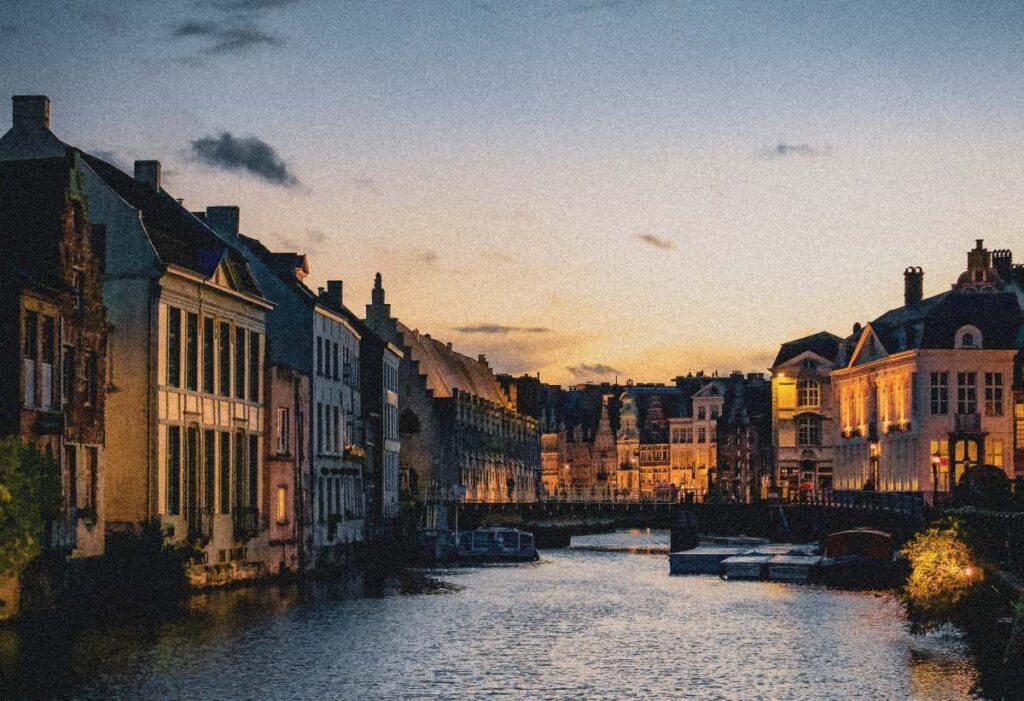
Belgium is among the countries with the lowest neutralization processes. To become a citizen, you must have stayed in Belgium for five years and demonstrate sufficient knowledge of one of the country’s national languages. You should demonstrate your economic participation by paying taxes and other social contributions for the few years you have been in the country. To start the application, you pay a registration fee of €1,030 in 2026 (Source: Belgian Federal Public Service Finance, October 2026). The country accepts dual nationality.
France

Foreign residents in France enjoy the shortest residency qualification in the world. The process requires one to have stayed in France for five years, but if one has done post-graduate studies in a French university, the years might be lowered to two years. That is why if you are looking for which country gives quickest citizenship, we recommend this country. However, like in any European country, you should not have a criminal record. You must also prove French at level B2, spoken and written, and pass a civic exam. You should appreciate the French people’s dynamic culture, politics, and history.
To apply for your citizenship, you will need two copies of the application form, a valid passport, a certified translation of your birth certificates, and your parent. You should also have your tax returns and three years’ pay slips. Nonetheless, don’t forget to accompany this document with your rental agreement or proof of home ownership. The administration has up to 18 months to decide, the fee is a €255 tax stamp, and dual nationality is accepted (Source: Service-Public.fr, October 2026).
The Netherlands

The Netherlands is another country with easy naturalization procedures for non-EU citizens. However, when you successfully become a Dutch citizen, you are required to forfeit your current citizenship. Its laws prohibit dual nationality. When you apply to be a Dutch citizen, you must have stayed in this country for five years, done and passed civil integration exams. Also, you will be required to profess your support for the Dutch State at your final citizenship ceremony. The application fee is €1,139 for one person in 2026 (Source: IND, October 2026).
Norway

Norway is not in the EU. It belongs to the Schengen area and the European Economic Area, so Norwegian citizens can live and work in EU countries without a permit. Norway has allowed dual citizenship since 2020. To qualify, you need a total of eight years of residence in Norway within the last 11 years, on permits valid for at least one year, or six years within the last 10 if your income in the last assessed tax year was high enough (Norwegian Nationality Act, sections 7 and 10). Unlike other European nations, your short absence will affect your nationalization process. You apply online and send several documents. This document includes your birth certificate, marriage certificate (where necessary), and a complete list of departures and entries in Norway. Your application must include a full police certificate, and you must pass an oral Norwegian test and the citizenship test.
Final words about The easiest country in EU to get a citizenship
Suppose you are looking for the easiest country in the EU to get citizenship. You will find that there isn’t the easiest countries per se. How easy it is to get citizenship depends on several factors, including your nationality, the amount of money you have, your willingness to learn another language, and many more. Furthermore, the pathway you want to follow to gain citizenship also determines which country will make it easy for you. The three routes covered in this guide are descent, naturalization and investment, and investment only gets you a residence permit, not citizenship. Depending on the pathway you are looking to acquire an EU citizen, choose the easiest country you can apply to in the above guide.
I have American and Cuban nationality, I think that for me the easiest country to obtain the European nationality would be Spain, since in 2 years you get the Spanish nationality, right?
Yes, the easiest way to obtain European citizenship would be to obtain Spanish citizenship.