The Spanish DNI for Foreigners: Who Can Actually Get One
- 📣 Three documents people mix upDocumentWho holds itWhat it actually isDNISpanish nationals onlyThe national identity card. The number on it doubles as your NIF for tax.NIEAny foreigner with business in Spain, resident or notA number, not a card. It identifies you for tax, property and paperwork.TIEForeigners resident in SpainThe physical card that proves your status. Your NIE is printed on it.If somebody tells you to apply for a foreigner DNI, they mean one of the last two. There is no such thing as a DNI for foreigners.What is a DNI number in Spain?
- 🔍 Can a foreigner obtain the Spanish DNI?
- 🔥 How do I get a Spanish DNI and passport?
- 😊 Do I need a DNI in Spain?
- 💻 How much does the Spanish DNI cost?
- 🔥 The only route to a DNI
Short answer: no, not while you are a foreigner. The DNI is the identity document for Spanish nationals and nobody else. What a resident foreigner carries is the TIE, and the number that identifies you is the NIE. The only way to hold a Spanish DNI is to become Spanish, which is what this page is really about.
Three documents people mix up
| Document | Who holds it | What it actually is |
|---|---|---|
| DNI | Spanish nationals only | The national identity card. The number on it doubles as your NIF for tax. |
| NIE | Any foreigner with business in Spain, resident or not | A number, not a card. It identifies you for tax, property and paperwork. |
| TIE | Foreigners resident in Spain | The physical card that proves your status. Your NIE is printed on it. |
If somebody tells you to apply for a foreigner DNI, they mean one of the last two. There is no such thing as a DNI for foreigners.
What is a DNI number in Spain?
DNI in Spain stands for Documento nacional de identidad which means National Identity Document in English. Technically, it is the ID document for Spanish nationals. The DNI number is on this DNI card and consists of one letter and eight numbers, for example, 23456789B. The letter is used for security.The purpose of the DNI document and its number is to prove an individual’s identity as a Spanish citizen by displaying some of their personal details. Also, as a citizen of Spain, you need this number when engaging in your legal and financial transactions. The DNI number is also used as a NIF number. The NIF is a tax identification number that legal individuals need so that they are allowed to carry out any tasks that may be of relevance to the tax agency of Spain. All Spanish citizens above 14 years are issued with this document by the Ministry of the Interior or the General Directorate of Police.Are you a foreigner who wants to acquire Spanish citizenship? If yes, the DNI comes at the end, once you are Spanish. Until then, what identifies you is the NIE. NIE stands for Número de Identidad de Extranjero (Foreigner’s Identity Number).It is worth mentioning that acquiring the NIE number does not mean you have automatically become a resident of the country, albeit the residents’ NIE does more as their DNI. For instance, purchasing real estate in the country does not necessarily mean you have to be a local, but a NIE is still a necessity to be able to complete transactions. On the contrary, non-residents in Spain for a long stay are considered residents provided they meet all the requirements of their visa annually. Long-term residents hold a TIE with their NIE number on it, not a DNI. The DNI only comes once you acquire Spanish nationality.But the main questions most foreigners interested in becoming Spanish citizens ask themselves are: how can I get a DNI? Why do I need it? How much does it cost to acquire one? Continue reading this article to find detailed answers to these questions.
Can a foreigner obtain the Spanish DNI?
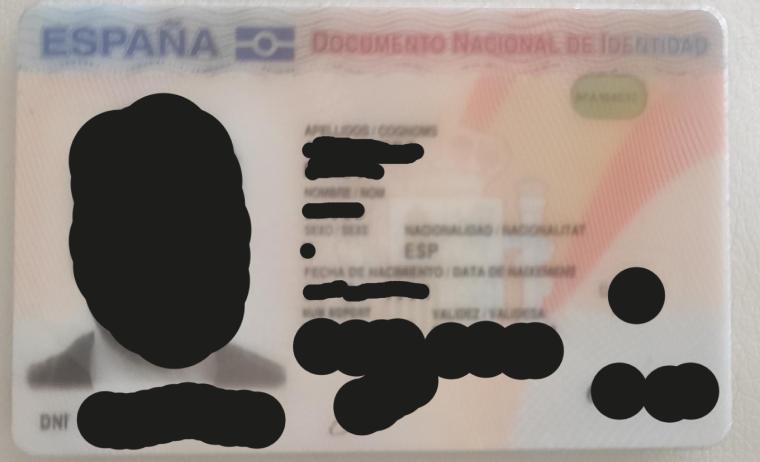
A foreigner who wants to come to live in Spain cannot obtain the DNI, as this is only for people who have Spanish nationality. If you are a foreigner and you obtain a Spanish visa you will get a TIE card, when you have the visa approved.Each TIE card comes with a different text, depending on the visa you have been granted, for example, if you are a student you will have that you can live because you are studying in Spain, if you obtain the non-lucrative visa, it will say that you can live in Spain but not work.If you hold one of the old investor permits, your TIE will say that you are an investor. Spain stopped granting them on 3 April 2025, although permits already granted can still be renewed.A foreigner can obtain the DNI if he/she has been living legally in Spain for 10 years (except for Latin American countries, which would be two years) or if he/she has married a Spaniard and has lived legally in Spain for 1 year, he/she can obtain the Spanish nationality by marriage.
How do I get a Spanish DNI and passport?
There is no foreigner version of the DNI. As a resident you apply for your TIE, and the number on it is your NIE. The DNI comes later, once you have obtained Spanish nationality by residence and sworn the oath. Getting a national ID (DNI) is a simple process that can be summed up in a few easy steps. First, you must ensure that you have all the documents needed. Under article 6 of Royal Decree 255/2025, the police fetch your Civil Registry entry and your padrón electronically for a first DNI unless you object, and they only ask you for paper copies if they cannot get them. The National Police DNI website asks you to bring them anyway, so have these ready:
- Your padrón certificate (certificado or volante de empadronamiento) from the town hall where you live, issued no more than 3 months before your DNI appointment.
- A literal birth certificate from the Civil Registry, issued only for getting the DNI and no more than 6 months before the appointment. This is the document that shows your entry in the Civil Registry.
- A recent colour photo of your face, 32 × 26 mm, on a plain white background, taken from the front with your head uncovered and no dark glasses or anything else that hides your face. The police accept photos up to 2 years old, and some DNI offices take the photo for you.
- Your TIE, or your EU registration certificate if that is what you hold, showing your NIE. For a first DNI after nationality the police treat it as an essential requirement.
When all these documents are ready, it’s time to get to the next step: to ask for an appointment to give in your documents. This process is carried out at the National Police. Requesting an appointment is done via their website or phone by contacting 060. You can request an appointment at your most accessible police station despite being registered or living elsewhere.One more thing to do after obtaining the DNI is to ask for your concordance certificate. You will use this document to inform all the organisations by which you have already registered with the NIE that your new identification method is the DNI you have recently acquired. The organisations include banks, Social Security and the tax agency.If you are a Spanish citizen living abroad, you still apply in person at a police DNI office in Spain, because the DNI is only issued in Spain. Instead of the padrón, you prove your address with a certificate from the Spanish consulate where you are registered as a resident, issued no more than 3 months before the appointment.When you move back to Spain, the address on the card changes, so you have to renew the DNI (article 8.3 of Royal Decree 255/2025). While the card is still valid, a renewal for a change of address is free.
Do I need a DNI in Spain?
Spanish nationals over 14 must hold a DNI. Foreigners do not, and cannot. What a resident foreigner must hold is the TIE, and article 209 of the Immigration Regulation gives you one month from the grant of your permit to apply for it in person.Technically, it is mandatory to have an ID card in most countries in the world. The ID mainly acts as a document to confirm a Person’s identity and is portable. Because it is easily portable, a citizen is advised to carry it at all times. The document can also be used for taxation, social security and voting purposes.Spanish law requires everyone to show the national identity card (DNI) to relevant authorities or the police if they ask them to. The document is obtained from the Ministry of the Interior or the Police General Directorate to recognise one’s identity, display some personal details, and prove that you’re a Spanish citizen. Some personal details on a DNI include name, ID number, date of birth, nationality and sex at the front and home, name of parents and place of birth at the back.In Spain, because you’re required by the law to have the DNI with you always, you have to provide it when asked to by any authorities or the police. However, if you do not have the ID card, you can provide another document in substitution for the ID, even though it is not an official way to identify a person. For example, under the law of Spain, an authority can decide to use the driver’s license to identify someone, but it is not the right document to show a person’s identity.In the case of not having a DNI or any other document that can help to identify someone, it is possible for a police officer to ask them to accompany them to the nearest place where they can get identified. If a person is asked to present their DNI and refuses, yet they are in a position to, it may be considered as breaking the law, which may result in a fine or, even worse, being taken to the police station and detained. Other reasons you should have a DNI in Spain is because the document helps you to open bank accounts, buy property, pay taxes, start a business, work or do anything official in the country.
How much does the Spanish DNI cost?
Just like any other Spain bureaucratic procedure, the process of issuing a DNI is done at a fee. In 2026 it costs 12 euros, and the National Police publish the current amount on the official DNI fees page. You pay it at the police station on the day of your appointment, in cash or by card. This is unlike other immigration exercises that need you to pay in advance and carry the confirmation when getting the documents.However, you can also pay the fee online through the same website you used to make your appointment. When you have completed your appointment application, at the bottom of the page is where you will find the link to the payment process. You only have to follow the procedure carefully to complete your transaction fast. But if at one point you want to renew the DNI for reasons like wanting to change your affiliation or address, you’ll not be required to pay the 12€ fee again. It will be completely free to complete that process.
What is the duration or validity of the DNI?
You have now obtained the DNI and are now a Spanish national. The next thing you should put into consideration is always checking the renewal dates of your DNI. You don’t have to worry about the renewal date, as the validity or duration of the document will help you know the exact expiration date. The validity is written on the document itself.The age of a Spanish national at the time of obtaining the identity document determines the validity or the duration of the DNI document. The validity is as follows:
- When the applicant is under 5, the document is valid for 2 years
- When the applicant is between 5-30 years old, the document will be valid for 5 years
- The validity will be 10 years if the applicant is between 30 and 70
- Lastly, from age 70 the card is valid for more than 10 years and carries an expiry date (article 7 of Royal Decree 255/2025). Cards already issued as permanent stay valid.
And that is all you need to acquire your Spanish DNI successfully. However, if you have any doubts about getting a Spanish DNI, our immigration lawyers can give you personalised legal advice.
The only route to a DNI
It runs through nationality. Article 22 of the Civil Code asks for ten years of legal residence as the rule, five for recognised refugees, and two if you are a national of origin of an Ibero-American country, Andorra, the Philippines, Equatorial Guinea or Portugal, or Sephardic. One year is enough if you were born in Spain, or if you have been married to a Spanish national for a year and are not separated. In every case the residence has to be legal, continuous and immediately before the application.
Tell us how long you have been resident and we will tell you where you stand.
I am working and living in spain for 4months, I have just got my 5 year temporary residency. Can I apply for a DNI card as I have a work contract and DNI number?
The DNI is only available to those who have Spanish nationality, you should apply for Spanish nationality first.
I have been living in Spain for more than 10 years but I still don’t have a DNI, can you help me to obtain the DNI as a foreigner?
Yes, we can help you to obtain the Spanish nationality and then obtain the DNI, you can contact us to start the process.