What is an EU residence permit?

The following documents will give you the right to stay and live in any part of Spain. EU citizens and their family members can also work anywhere in Spain. For other foreigners, it depends on the permit. The documents are a residence visa, eu residence permit card, residence card, residence certificate, and foreign identity card. You may ask yourself which of these documents you need and where you can get them.
Do EU citizens need a residence permit in Spain?
For a person from an EU country and an EU citizen, it may not be a requirement for you to have a residence visa to have access to Spain. However, you will be required to get a residence certificate if you stay in Spain for more than three months.
How do I get a residence permit to live in Spain?
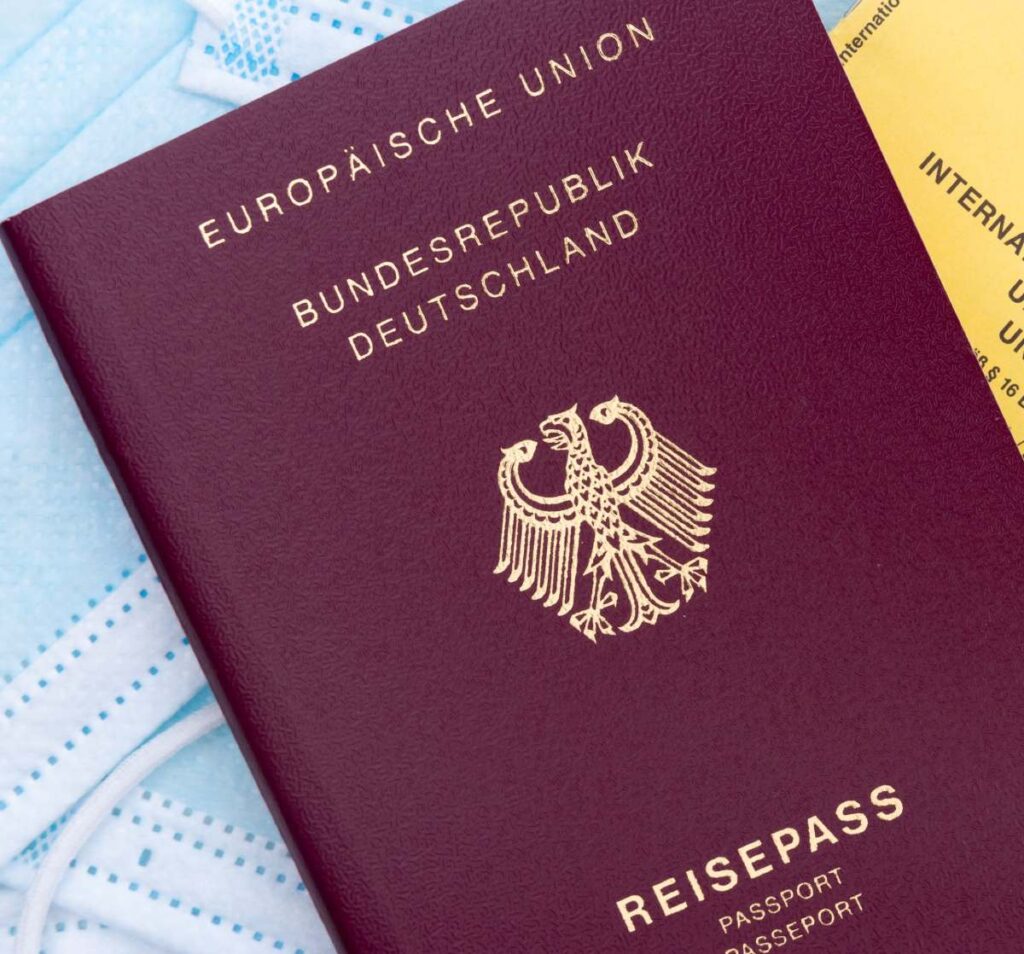
You will be required to fill out an application at an immigration office to get your permit.
How long can an EU resident stay in Spain?
As an EU citizen you do not need a permit and there is no time limit. If you stay more than three months, you register within three months of arriving and get the EU registration certificate, showing that you work or study here or have enough money and health insurance.
Can I work in Spain with eu residence permit?
You are allowed to stay and work as an EU citizen without needing to have a work permit.
The permits for non-EU citizens
For people who are not EU citizens, the usual route is to apply for a national visa at a Spanish consulate before you arrive. The visa lets you enter Spain and covers you until you get your card.
If your visa or permit lasts more than six months, you usually apply for the foreign identity card (TIE) at the police within a month of arriving, or of the grant if you applied from Spain. For shorter stays, and while a digital nomad visa is valid, the visa itself is your document.
Common examples are a passive-income residence visa, long-term visa, self-employed and freelance work visa, or a student stay authorisation. Most are requested at a Spanish consulate before you travel, although a few, like the digital nomad permit, can be filed from inside Spain while your stay is still valid.
How can I get a permit as a EU citizen?

Citizens from EU countries will be required to have a residence certificate for Spain. The document will need you to indicate your full name, address, nationality and, if you already have one, your NIE (foreigner identity number). The application is made at your local foreigner’s office. Some of these offices will require that you book an appointment before. You should file this within three months of your stay in Spain.
With the application, you should provide other documents:
- Your passport or national identity card
- Copy of passport or National identity card
- Proof of address in Spain
- An EX18 application form filled with all relevant information.
- Proof of fee payment: €12.00 (Policía Nacional fees, September 2026)
- If you will not work in Spain: proof of health insurance and of enough money for your stay
You may be required to produce additional documents depending on your reason for wanting to stay in the country. If you want to visit Spain because you have been able to acquire employment, you will be required to produce a document confirming that you have a job.
If you could acquire self-employment at the time of stay, you would be required to produce proof of self-employed status. It will be a part of the form of registration.
How long is the EU residence permit valid?
The validity of your eu permit will remain as long as the circumstances of the reasons you stayed in Spain are the same in the application. If your details change, for example your address or marital status, let the immigration office or police know so your certificate stays up to date.
Who can apply for Long Term Residency Permits?
If you have been to Spain continuously, with legal documents for about five years, and you are from a non-EU country, you can apply for this permit. The continuous visiting of Spain will not be affected by an absence of six months from any of the Spanish territories. It can affect your application for long-term residency if it exceeds more than ten months in the previous five years. If your absences were for work, the total can reach 18 months in the five years.
How is a calculation of time done?
The long-term residence permit only considers the period for legal residence to be computed in five years. An EU Long-Term Residence Permit, you can do it if you remain in Spain for studies, internships, and student mobility, and it will account for 50% during the counting of your duration.
The scope of application of Long-term Residence
One of the main advantages of having an EU long-term residence permit over a regular Long Term Permit is that it increases the chance of obtaining long-term residence of another member of the European Union. For long-term living, it is only valid in your respective country.
The Application of Long-Term Residence
The application for a long-term residence will consider the consecutive months that you have resided in any Spanish territory for five years before your application. The EU Long term permit will require that you have a further requirement in that you should have the regular cash flow for their continued maintenance.
Other procedures
After being granted Long-Term Residence or the EU long-term residence, it is a requirement that you request to get a Foreigner identity card at an immigration office or a police station in the province of your home.
EU residency permit in Spain as a Family Member is an EU citizen
If your spouse or partner is a citizen of another EU country and lives in Spain, you can apply for the residence card of a family member of an EU citizen, which lets you live and work here. You have to prove the family link, for example with a marriage certificate or a partnership registered in an EU country, and show that the EU citizen lives in Spain as a worker, as self-employed, as a student, or with enough money and health cover. If your family member is Spanish, this card no longer applies to new applications, except in some cases where the Spanish citizen has lived and worked in another EU country and is coming back. Since 20 May 2025, relatives of Spanish citizens apply for their own residence permit under articles 93 to 99 of Royal Decree 1155/2024, which our partner visa guide explains.
This card is for relatives of a citizen of another EU country. If the family member who already lives in Spain is a non-EU national with a Spanish residence permit, the route is different: see our guide to the family reunification visa for Spain.
Residence card of a family member as a European Union citizen
Royal Decree 240/2007 allows a citizen of another EU or EEA country, or of Switzerland, who lives in Spain to bring close relatives to live and work anywhere in the country. The close can enjoy all the rights that an EU citizen will enjoy.
This procedure is what we call a family member of a European Union citizen. The right will allow a spouse to apply for residency and work authorization, allowing them to work in any Spanish territory and enjoy the same conditions as any other EU citizen.
It is why relationships that are constituted of one partner being an EU citizen and the other being a Non-citizen usually work out, and the result becomes marriage or civil partnership. Hence, the partner ends up getting Spanish residency.
It is not all partners will get the benefits of Spanish residency through this method. The extended family members of an EU citizen can still benefit from this method. Which of the relatives can benefit from this?
Which relatives does this apply to?
It is clear that direct relatives can apply for an EU visa and even get EU residency. By immediate relatives, I mean a spouse. The other categories of relatives that can bring an EU visa are First-degree descendants. These are the children of an EU national and the spouse. There is, however, something vital that you should keep in mind. Children under 21 are covered by the EU regime. From 21 onwards, they are covered only if they depend on the EU citizen or the spouse, or have a disability. Otherwise the general immigration rules apply.
Who is considered to be an extended family member?
Other relatives, such as brothers, sisters or a partner you have not registered, are not covered automatically. The office must still weigh their case if they depend on the EU citizen, live with them, or need their personal care for serious health reasons (article 2 bis of Royal Decree 240/2007).
Relatives of the EU citizen will have to follow these requirements:
- The individual who is an EU national take full responsibility for the relative.
- If a person in the family circle has any health issues, they will be under the care of the EU national.
It is important to note that you might have applied for an eu residence permit visa and fall in any category, but the immigration office can deny you the visa. Sometimes immigration officials are strict and will take extra precautions when handing out the permit.
What are the primary legal aspects of the procedure and renewal of a residence card?
- Renewal of the permit will occur in the nearest immigration office close to you or in your Autonomic region.
- You will have 90 days to process the card after entering any Spanish territory.
- The residency and work authorization is valid for five years from the day of issue. The card’s truth will be in the 5-year time frame.
- The card stays valid while the family link lasts and the EU citizen lives in Spain, except in the cases of article 9 described below.
- When you renew, the family link with the EU citizen normally has to still be in place. After a divorce or the EU citizen’s death, you keep the right only in the cases set out in article 9 of Royal Decree 240/2007.
- An EU citizen with permanent residence only loses it after more than two consecutive years away from Spain (article 10 of Royal Decree 240/2007). For the non-EU family member, absences of up to six months a year do not affect the card, and neither does one absence of up to twelve months in a row for an important reason such as pregnancy, serious illness, studies or a work posting (article 14.3 of Royal Decree 240/2007). Longer absences can put the card at risk.
Is there a difference between civil union and residency as a relative?
In a true sense, they are not the same, and most people will confuse both of these scenarios. You can use a civil union to attain residence authorization and residency to achieve a civil union in Spain. It is a way you can obtain to get a Spanish visa. It is why most couples will register as a civil union. It will give the non-EU national the right to register using this procedure.
You do not need a civil union to get residency as a relative of an EU citizen. Marriage, a registered partnership or a durable relationship you can prove can all open this route, and so can the other relatives listed in the decree.
What are the requirements to get a citizen visa for a family member?
The requirements are simple to adhere to. If you have a relative or partner, it will be direct for you as you will avoid presenting certain documents which you would suggest if you were applying for other permits.
Will the requirements you will need to meet to apply for a visa be the same as you will need to meet when you want to apply for permanent residence and work authorization?
- The EU citizen must live in Spain.
- If you accompany or join a citizen in Spain, you will live with them.
- The EU citizen must work in Spain, as an employee or self-employed, or have enough money for the whole family, or be enrolled as a student with enough money (article 7 of Royal Decree 240/2007).
- If the EU citizen does not work in Spain, they also need health insurance, public or private, that covers you both in Spain. A pension from another country that includes healthcare counts (Order PRE/1490/2012).
- You must prove the family link: a marriage, a registered partnership or a durable relationship with the EU national.
What are the exact numbers that you will need?
This will assist you in getting to know if you have enough funds.
It will be dictated by the number of relatives you have and the number you can take to Spain.
There is no fixed figure in the law (article 7.7 of Royal Decree 240/2007). If the EU citizen works in Spain, the job is enough. If not, the office accepts as a guide means above the yearly non-contributory pension, €8,803.20 in 2026, adjusted to the personal and family situation (Order PRE/1490/2012 and Royal Decree-law 3/2026).
How will you know that there is a TIE between relatives?
It is a crucial procedure in your application for EU residency. It is a legal requirement that the TIE between relatives is valid to avoid manipulating the system.
The best way to ascertain that TIE is authentic will depend on the relationship:
- Spouse
If you have a legal marriage and are an EU citizen, but your partner is not an EU citizen, you must meet the following requirement.
- The marriage certificate can be from Spain or from another country.
- If the certificate is from another country, it must be legalised or carry an apostille, with a sworn translation if it is not in Spanish.
The card you receive is valid for five years, as for any other family member.
Hello, I am writing in respect of my friend who is in Madrid, Spain. She intends to put EU long residence permit on her permanent Spanish residence permit. She is working and already a permanent resident in Spain. Please, how can you assist to get the EU long residence permit for her. Thanks as I await your prompt anticipated response
My wife is French and I am British, can you help me to obtain a residence permit as an EU family member?
One of our lawyers will contact you to help you through the whole process of obtaining EU family residency.
Hi! I am a Dutch citizen who has moved to Spain (3 weeks ago) with my son (also Dutch) and my husband (Canadian). We are interested to know how much it would cost for you to complete the residency permits for the three of us.
Thank you!
Jayne,
One of our lawyers will contact you to answer your questions about EU residence permit in spain.
Regards,
Contacted MSV for help getting a Spanish Residency. Great help from Lucia who guided me every step of the way, made reservations and followed up until I obtained the residency.
Highly recommended!
Thanks Arnulf for your comment!
married to a eu french man but i own house alone in spain on my name only
i do have full disability money in england we are both old and ill
would like to live in spain but would we loose our pensions from england
if we applied to live in spain
Sandra,
One of our lawyers will contact you to answer your questions about EU residence permit in Spain.
Regards,